NEPRA Approves 30-Year Tariff of 9.3843 Cents/kWh for 102MW Gulpur Hydropower Project
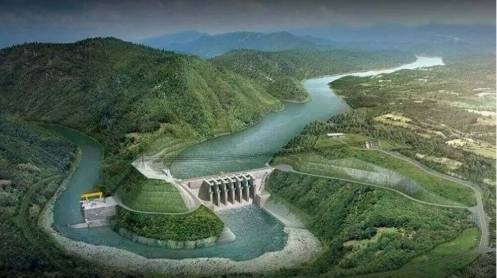
**ISLAMABAD:** The National Electric Power Regulatory Authority (NEPRA) has approved a levelised tariff of US cents 9.3843 per kWh for 30 years for the 102-megawatt run-of-the-river Gulpur Hydropower Project, developed by Mira Power Limited (MPL) in Azad Jammu and Kashmir (AJ&K).
According to NEPRA’s latest determination, the approved generation tariff has been set at Rs17.3751 per kWh for the first 12 years and Rs8.2686 per kWh for the remaining 18 years, resulting in a levelised tariff of Rs14.8507 per kWh.
The tariff is based on a net contracted capacity of 100.98MW and net annual energy production of 474.996 gigawatt-hours (GWh).
The tariff will remain applicable for 30 years from the Commercial Operation Date (COD) under a Build-Own-Operate-Transfer (BOOT) arrangement. Debt servicing is scheduled to be completed during the first 12 years of operation.
Mira Power Limited, a subsidiary of Korea South-East Power Company (KOEN), developed the project on the River Poonch in Muzaffarabad district of AJ&K. The project was established under the Government of Pakistan’s Power Generation Policy 2002.
KOEN holds a 76 per cent stake in the project, while DL Holdings and Lotte Engineering & Construction hold 18pc and 6pc, respectively. The sponsors were issued a Letter of Intent (LoI) by the Private Power and Infrastructure Board (PPIB) on March 12, 2005.
NEPRA had earlier approved a levelised tariff of US cents 9.0241 per kWh on August 3, 2015, equivalent to Rs9.4617 per kWh at an exchange rate of Rs104.85 per US dollar, along with applicable indexation and adjustment mechanisms.
The Authority had subsequently directed the Central Power Purchasing Agency-Guarantee (CPPA-G) to submit an amended Power Purchase Agreement (PPA) for approval.
MPL later filed a tariff modification petition through CPPA-G, seeking revision of NEPRA’s October 28, 2015 decision. The company cited severe liquidity constraints, noting that its tariff had been indexed at an exchange rate of Rs104.85 per dollar while debt repayments were being made at significantly higher exchange rates of around Rs150 per dollar.
The company also sought relief on the grounds that the COD adjustment process could take considerable time.
In its March 9, 2021 decision, NEPRA allowed an interim modification of the EPC-stage tariff by adjusting relevant components using an exchange rate of Rs158.25 per dollar, which was the prevailing rate at the project’s COD on March 10, 2020.
The Authority subsequently indexed the relevant tariff components, subject to final adjustment at COD.
The Gulpur project also faced construction delays attributed to force majeure events, resulting in extensions to the construction schedule and additional cost claims that went through various regulatory stages.
In a dissenting note, NEPRA Member (Tariff and Finance) Amina Ahmed raised concerns over the prolonged delay in deciding the COD adjustment request, which had been filed in March 2022 and remained pending for more than three years.
She also disagreed with the majority decision to disallow exchange-rate variation on the entire engineering, procurement and construction (EPC) cost.
According to her, NEPRA’s reasoning that EPC costs incurred locally should be paid in Pakistani rupees without exchange-rate indexation was inconsistent with the regulator’s previous decisions, where exchange-rate variations had been allowed in several tariff cases across different technologies.
However, she agreed that civil works costs should remain denominated in Pakistani rupees under the specific escalation mechanism approved in the reference tariff.
She further noted that the electrical and mechanical (E&M) component of the EPC cost, valued at $9.55 million, had not been granted exchange-rate adjustment. In her view, this component qualified for indexation because it was incurred in foreign currency, was not denominated in rupees in the reference tariff and was not covered by the approved escalation mechanism.
Citing the precedent of the Laraib Energy project, she argued that similar onshore EPC costs not covered under an escalation mechanism had been treated as dollar-based and allowed exchange-rate variation.
She concluded that there was no sufficient justification for denying Mira Power exchange-rate variation on the E&M component.
Story by Mushtaq Ghumman