By any measure, Pakistan’s oil security rests on a precarious foundation: the country has no government-controlled strategic oil reserves—not even enough to meet its needs for a single day.
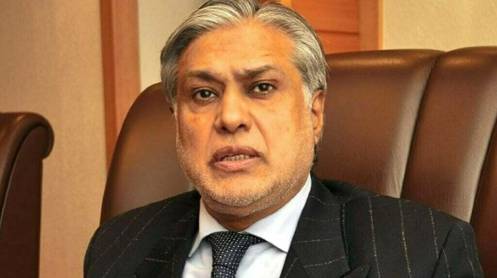
This startling admission came from Federal Petroleum Minister Ali Pervaiz Malik during a recent appearance on a television news talk show hosted by senior journalist and anchorperson Nadeem Malik. The disclosure exposes a critical vulnerability in a country whose economy, transport system, industry and power sector remain heavily dependent on uninterrupted supplies of petroleum.
The minister made it clear that Pakistan currently relies entirely on commercial oil stocks, rather than a dedicated national strategic reserve that the government could draw upon during a major international disruption, supply shock or other emergency.
Under the existing licensing and regulatory framework, the country’s oil refineries are required to maintain crude oil stocks equivalent to five to seven days of supply, while oil marketing companies maintain refined petroleum products sufficient for around 20 to 25 days.
These stocks, however, are not the same as a strategic reserve controlled by the state.
The distinction is crucial. Commercial inventories exist as part of the normal functioning of the petroleum supply chain. A strategic reserve, by contrast, is essentially an emergency national buffer—oil deliberately stored and held for release when normal supplies are threatened.
And Pakistan, according to its petroleum minister, has no such government-controlled buffer.
A minister without an emergency oil tap:
The minister offered another striking comparison. Unlike India, where the petroleum minister can reportedly order the release of strategic stocks during an emergency, Pakistan’s petroleum minister does not have the authority to simply issue an order and make 60 to 70 days of oil supplies available from a government strategic reserve.
In other words, there is no national oil stockpile sitting underground that the government can tap at the stroke of a pen.
Instead, the government manages the petroleum sector through licensing arrangements, regulatory and governance mechanisms and the existing laws of the land. The actual stocks are maintained by commercial players within those regulatory requirements.
That may keep the normal supply chain functioning, but it leaves the country exposed when circumstances move beyond the normal.
A geopolitical crisis, disruption of international shipping routes, sanctions, a sudden international supply shock or another major emergency could put enormous pressure on a system that has no dedicated government reserve to fall back upon.
The plan that has been waiting in the wings:
The government, however, appears to have recognised the gap.
According to Ali Pervaiz Malik, around two to three years ago the international consultancy Mott MacDonald was engaged to prepare a feasibility study for establishing strategic oil reserves in Pakistan.
The proposed infrastructure would not be a modest undertaking. The minister said the basic one-time storage cost alone would be around US$30 to $40 per barrel, with strategic reserves generally built underground.
The eventual project is expected to cost hundreds of millions of dollars.
The initial government target is to establish strategic stocks equivalent to 30 days of oil requirements—a significant improvement over the present situation, but still only half of the 60 to 70 days of strategic cover cited in the comparison with India.
A working committee has now been constituted to take forward the recommendations of the feasibility study. The committee includes representatives of Pakistan’s oil refineries, while Mott MacDonald has also been brought on board.
This suggests that the proposal has moved beyond the stage of merely recognising the problem and towards developing an implementation mechanism.
More than just digging storage tanks:
The proposed strategic reserve plan is also expected to examine the country’s existing storage infrastructure.
The exercise will map and measure the capacity of oil storage facilities in different parts of Pakistan, providing a comprehensive picture of where storage capacity exists, how much of it is available and how it could potentially contribute to national energy security.
It will also examine redundant furnace-oil-based power plants that have been mothballed.
That element could prove significant. Rather than looking at strategic oil storage in isolation, the exercise appears intended to assess the country’s wider petroleum and energy infrastructure and determine what existing assets could be incorporated into an emergency-response framework.
The uncomfortable question:
The minister’s disclosure raises a fundamental question: how secure is Pakistan’s energy system when the state has no strategic oil reserve of its own?
For years, energy security has largely been discussed in terms of production, imports, refinery capacity, pipelines, terminals and electricity generation. But the ability to maintain supplies during a crisis depends on something equally fundamental: having sufficient stocks physically available when international supplies are interrupted.
Pakistan currently has commercial inventories. Refineries hold five to seven days of crude, while oil marketing companies maintain 20 to 25 days of refined products. But these stocks operate within the commercial supply chain and are not equivalent to a national strategic reserve.
The proposed 30-day strategic reserve could therefore represent a major structural shift in the country’s energy-security architecture.
But building such a reserve will require more than announcing a policy. It will involve enormous capital expenditure, suitable underground storage, distribution infrastructure, security arrangements, financing mechanisms, replenishment policies and, crucially, a clear framework governing when and how the reserves can be released.
The fact that Pakistan is only now working towards establishing its first strategic oil reserve is, in itself, a sobering reminder of how vulnerable the country remains to external energy shocks.
For a country that imports a substantial share of its petroleum requirements and whose economic activity depends on the uninterrupted movement of fuel, having no government strategic oil reserve even for a single day is not simply an energy-policy gap. It is a national vulnerability waiting for the wrong crisis to expose it.
The proposed reserve may eventually provide Pakistan with a much-needed safety net. But until those barrels are actually underground and available for an emergency, the country’s oil security will continue to depend primarily on commercial stocks—and on the uninterrupted functioning of an increasingly uncertain global energy supply chain.