# Power Tariff May Rise Rs2.50 per Unit Under July FCA
**ISLAMABAD:** Electricity consumers of distribution companies (Discos) and K-Electric may face an increase of around **Rs2.50 per unit** in their power tariffs for July 2026 under the monthly Fuel Charges Adjustment (FCA), with the proposed adjustment expected to generate more than **Rs34 billion** from consumers, sources said.
The higher positive FCA is mainly attributed to increased electricity consumption during July and greater reliance on expensive fuels, including **spot-market LNG and furnace oil**, to meet peak-hour demand.
The National Electric Power Regulatory Authority (Nepra) recently approved a positive FCA of **Rs0.7503 per unit for June 2026**, against the Rs1.20 per unit adjustment sought by the Central Power Purchasing Agency-Guaranteed (CPPA-G).
Nepra will assess various costs included in CPPA-G’s FCA request before determining the final adjustment. Separate FCAs will subsequently be calculated for each Disco after accounting for electricity purchased through CPPA-G, bilateral contracts with SPPs and CPPs, and net-metering arrangements within each Disco’s supply basket.
The expected increase comes as Pakistan’s industrial sector continues to face high electricity costs, while exporters are under additional pressure amid deteriorating conditions in the Middle East.
During a recent discussion, Nepra expressed concern over **partial-loading charges of around Rs4.9 billion** and sought CPPA-G’s strategy to reduce the additional cost.
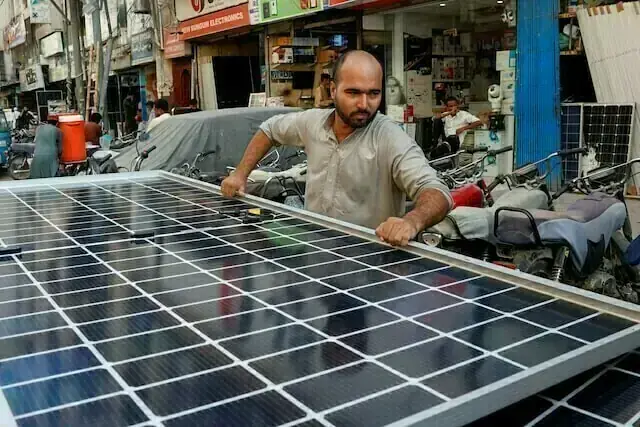
CPPA-G explained that the charges were not primarily the result of operational inefficiencies but were linked to declining daytime grid demand due to the rapid growth of **rooftop solar generation**. As a result, conventional power plants had to operate at partial load during solar-generation hours and were later ramped up to meet higher electricity demand in the evening.
CPPA-G assured Nepra that efforts would be made to minimise partial-loading costs. The authority noted that such charges in June 2026 were around **Rs1 billion higher** than in the same month of 2025.
The Independent System and Market Operator (ISMO) pointed out that shutting down power plants to avoid partial-loading charges could instead lead to substantial start-up costs.
Meanwhile, leading textile exporter Amir Sheikh urged the government to remove the levy on **high-speed diesel and furnace oil (HFO)** to allow HFO-based power plants to operate as an alternative to more expensive RLNG-based generation.
He also proposed that the FCA surcharge be calculated on the basis of **prospective electricity consumption**, similar to the methodology used for quarterly tariff adjustments (QTA).
Rehan Javed also expressed concern over declining electricity demand and its possible impact on future quarterly tariff adjustments.
According to the Ministry of Energy’s Power Division, electricity demand has declined largely due to the growing number of net-metering consumers. However, the ministry said the impact on quarterly tariff adjustments would not be as significant as anticipated by industrial consumers.
The Power Division added that electricity demand was being managed to reduce reliance on expensive **RLNG spot cargoes**, which could otherwise put further upward pressure on electricity prices during the summer months.
Story by Mushtaq Ghumman