# OASIS Calls for 35% Indigenous Gas Allocation to General, Process Industries
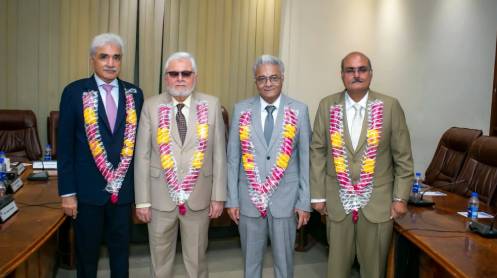
**ISLAMABAD:** The Organisation for Advancement & Safeguard of Industrial Sector (OASIS) has urged the Petroleum Division and Oil and Gas Regulatory Authority (OGRA) to strictly reserve **35% of third-party domestic system gas** for general and process industries, warning that diversion of indigenous gas to captive power plants and CNG stations could hurt industrial growth, exports and economic activity.
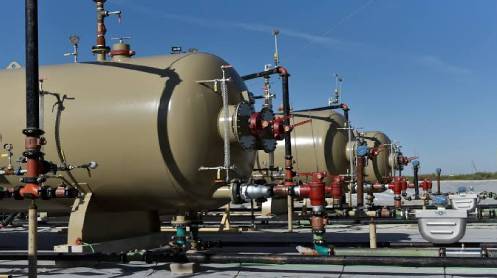
In a letter to the Secretary of the Ministry of Energy (Petroleum Division), OASIS highlighted what it described as a regulatory gap following the Council of Common Interests (CCI) approval allowing exploration and production (E&P) companies to sell up to 35% of pipeline-quality gas to third parties through competitive bidding.
The association said the intent of the 35% open-market mechanism, read with the broader Natural Gas Allocation & Management Policy, was to help address upstream circular debt while ensuring energy security for high-priority and value-added industrial sectors.
OASIS argued that allocating indigenous system gas to general and process industries would provide greater input-cost stability, enabling domestic manufacturers to remain competitive, sustain exports and protect employment amid challenging economic conditions.
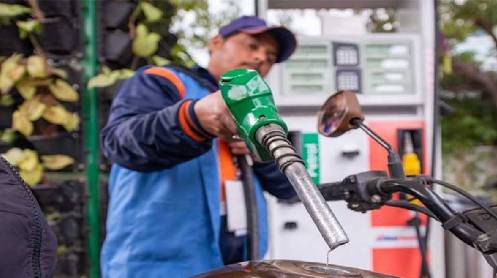
However, the association expressed concern that intermediary Gas Marketing Companies (GMCs) were acquiring significant portions of the 35% allocation for resale to captive power plants and CNG stations.
According to OASIS, diverting scarce indigenous gas to these sectors offers limited macroeconomic benefits compared with supplying manufacturing and export-oriented industries.
The association maintained that prioritising indigenous gas for processing, manufacturing and export-oriented industries could contribute to higher GDP growth, increased industrial output, greater exports and foreign exchange earnings, employment generation, higher tax revenues and improved international competitiveness.
OASIS said every unit of indigenous gas diverted from productive industrial activity represented a lost opportunity for value addition, industrial production and economic recovery.
The association has proposed a clearer regulatory framework for gas distribution by GMCs operating under OGRA’s Third Party Access (TPA) Rules.
Its key demand is that the **35% third-party domestic system gas allocation be strictly reserved for general and process industries**, where gas is directly used for raw-material processing and value-added manufacturing.
OASIS has also proposed **RLNG ring-fencing**, under which GMCs and suppliers would be required to meet the fuel requirements of captive power plants and CNG stations exclusively through imported Re-Gasified Liquefied Natural Gas (RLNG).
The association argued that this dual-track approach would protect relatively cheaper indigenous gas for core manufacturing while meeting the energy requirements of captive power and CNG consumers through imported RLNG.
It has urged the Petroleum Division and OGRA to issue binding guidelines to implement the proposed allocation mechanism and conduct **quarterly end-use compliance audits** to ensure that gas supplied under the 35% third-party arrangement is ultimately consumed by the intended industrial sectors.
OASIS said the proposed framework would preserve the original objectives of the gas allocation policy while ensuring that scarce indigenous resources are directed towards sectors capable of generating industrial value addition, exports, employment and tax revenues.