EDITORIAL: Pakistan’s energy challenge is once again receiving the attention it deserves, with the government signalling greater emphasis on domestic exploration, refinery investment, transparency in petroleum pricing and the attraction of foreign capital. These are welcome priorities. But the scale of the challenge requires considerably more than a new exploration push or a fresh roadmap.
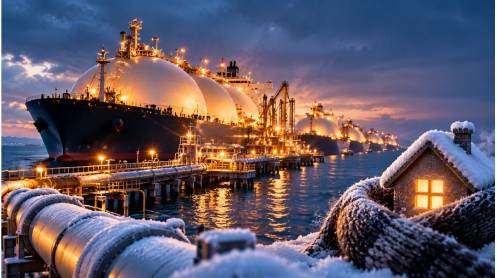
Thank you for reading this post, don't forget to subscribe!The petroleum minister’s admission that Pakistan imports around 90 percent of its energy requirements, while domestic oil production of roughly 70,000 barrels per day meets only a fraction of demand of around 500,000 barrels per day, is perhaps the most important statistic in his remarks. It underlines the structural vulnerability of an economy whose energy bill remains heavily exposed to international prices, exchange-rate movements and geopolitical disruptions.
The recent turbulence in global energy markets has provided another reminder of this vulnerability. The Iran-US conflict and the resulting disruption to regional energy flows have demonstrated how quickly the prices of crude and petroleum products can move when geopolitical risk rises. Pakistan may have managed to maintain uninterrupted fuel supplies during the recent episode, but the fiscal and external-account consequences of such shocks cannot simply be wished away.
This makes the government’s renewed focus on indigenous exploration appropriate. Pakistan has considerable geological potential, and the recent efforts to attract international exploration companies, including the planned offshore drilling activity by Turkish Petroleum, are encouraging. Yet exploration is inherently uncertain. New discoveries cannot be treated as an assured substitute for imported energy, nor should announcements of drilling automatically be equated with energy security.
The more important question is whether Pakistan can create an investment environment in which exploration becomes commercially attractive on a sustained basis. That requires predictable policies, competitive pricing, timely approvals, transparent contracts and a regulatory framework that does not change with every change in government. The same applies to downstream investment.
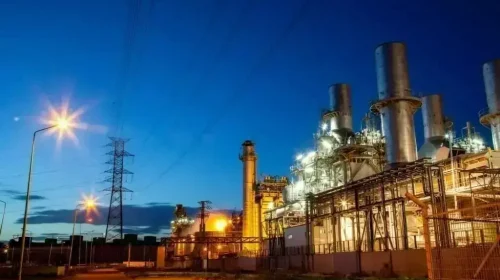
The approval of the refinery policy is therefore another potentially important development. Pakistan has for years struggled with an ageing refining sector, an increasingly costly import bill for refined products and inadequate investment in upgrading domestic capacity. Modernisation can improve the product slate, reduce reliance on imported fuels, and strengthen the country’s ability to absorb external supply shocks. But here, too, policy consistency will matter more than the announcement itself.
There is, however, a broader aspect that needs to be kept firmly in view. Energy security does not mean simply producing more oil and gas. It means diversifying the energy mix, improving efficiency, reducing losses, investing in transmission and storage infrastructure, and ensuring that energy is priced in a manner that encourages efficient consumption without placing an unreasonable burden on vulnerable households.
Pakistan’s past experience with energy policy offers enough evidence of what happens when these elements are treated separately. Expensive generation capacity, inefficient distribution, transmission bottlenecks, gas-sector circular debt and poorly targeted subsidies have all imposed costs that eventually find their way to consumers or the national exchequer.
The government’s claim that the flow of circular debt has been halted is therefore worth watching rather than merely applauding. Sustained reduction in the stock requires structural correction of the factors that generate the debt in the first place. One-off settlements, budgetary support or adjustments to accumulated liabilities can improve the headline number, but they do not constitute reform unless the underlying flow remains contained.
The same principle applies to petroleum pricing. Greater transparency in the pricing mechanism is welcome, particularly when international prices are volatile. The recent move towards more frequent price adjustments has already demonstrated the usefulness of allowing domestic prices to respond more gradually to external movements rather than subjecting consumers and the government to large periodic shocks; but transparency must ultimately be accompanied by competition and deregulation.
The downstream petroleum sector should therefore continue moving towards complete deregulation, with oil and gas regulator, OGRA, concentrating on market oversight, competition, safety and compliance rather than administrative management of commercial decisions. Digital monitoring of the petroleum supply chain, tighter enforcement against smuggling and hoarding, and greater transparency in mechanisms such as the Inland Freight Equalisation Margin will be essential complements to liberalisation.
Nor should exploration be viewed in isolation from the country’s broader transition towards electricity, renewables and greater energy efficiency. Pakistan has already witnessed an extraordinary expansion in distributed solar capacity. The implications for the traditional electricity and gas markets are profound. Policymakers must therefore resist the temptation to build energy policy around yesterday’s consumption patterns.
This is particularly important when discussing a comprehensive energy roadmap. The proposed roadmap should not merely seek to replace imported molecules with locally produced ones. It should answer a more fundamental question: what should Pakistan’s energy system look like over the next two decades, given the country’s external-account constraints, climate vulnerabilities, changing technology and rapidly evolving economics of renewable energy, and storage?
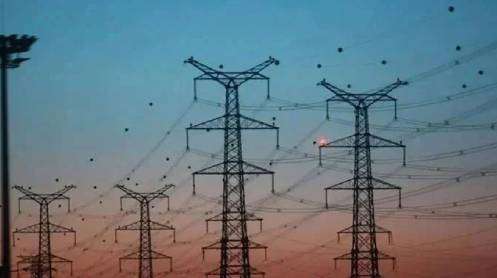
The answer must include domestic hydrocarbons where they remain commercially viable, but also greater reliance on indigenous renewable resources, more efficient use of imported fuels, modernised refineries and pipelines, stronger electricity networks and market-based energy pricing. Energy security is ultimately a function of diversification.
The government deserves credit for recognising that energy security and economic growth are inseparable. But the test will be whether today’s announcements translate into institutional and market reforms that survive beyond the current political cycle.
Pakistan cannot drill its way out of energy insecurity; nor can it subsidise its way out of it. What is required is a sustained effort to make domestic investment viable, imports more efficient, markets more competitive and the overall energy system less vulnerable to external shocks.
The immediate objective should be clear: reduce the country’s exposure to imported energy without replacing one form of vulnerability with another. That will require exploration; yes, but also deregulation, infrastructure investment, fiscal discipline, better regulation and a deliberate transition towards a more diversified energy mix.
For now, the renewed focus on energy security is welcome. The real measure of success, however, will not be the number of roadmaps prepared or wells drilled, but whether Pakistan eventually becomes less vulnerable every time international energy markets turn turbulent.