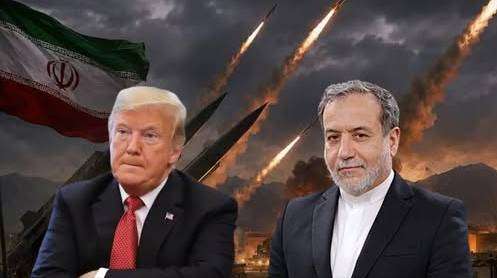
KARACHI: Tensions between Iran and the United States have sharply escalated after Tehran launched attacks on US military positions in Jordan and the United Arab Emirates (UAE), in retaliation for American strikes on Iran’s Larak Island in the Strait of Hormuz.
Iran’s Islamic Revolutionary Guard Corps (IRGC) said it targeted two US military air bases in Jordan with ballistic missiles, claiming the attacks inflicted “heavy damage”. Jordan’s military, however, said it intercepted eight missiles without identifying their origin.
The Iranian strikes followed a US attack on Iranian rocket launchers stationed on Larak Island, a small but strategically important location in the Strait of Hormuz. Washington said the operation was intended to prevent Iran from deploying additional sea mines in the vital shipping corridor.
US Central Command (Centcom) said its forces had taken “limited, precise action” against IRGC units involved in mine-laying activities that posed an imminent threat to the Strait of Hormuz.
The IRGC said the US strikes caused casualties and described its subsequent missile attack on Jordan as a response to what it called “US-Zionist aerial aggression”.
Iran also claimed responsibility for a drone attack on the UAE’s Al Minhad Air Base. Iranian state television reported that the operation targeted areas where US troops and helicopters were stationed.
Iran’s Foreign Ministry separately said its armed forces had attacked US bases in Jordan because those facilities were allegedly used to launch and support the American operation against Larak Island. Tehran described the strikes as an exercise of its “legitimate defence” and warned that further military aggression would trigger a decisive response.
The latest exchange of fire comes as the US-Iran conflict enters its sixth month, following several weeks of relatively reduced hostilities. The Trump administration has increasingly relied on economic pressure and sanctions against Tehran rather than direct military action.
The conflict has also intensified pressure on the Strait of Hormuz, a critical global energy route through which around one-fifth of the world’s oil previously passed. Iran’s effective restrictions on the waterway have contributed to higher energy and fertiliser prices and disrupted international supply chains.
US Treasury Secretary Scott Bessent said Washington was preparing additional secondary sanctions against Iranian-linked financial institutions, with banks expected to be among the initial targets. He warned that more sanctions could be announced on a weekly basis as part of the US campaign to intensify economic pressure on Tehran.
The latest military escalation threatens diplomatic efforts to end the conflict. Mediators, including Pakistan and Qatar, have been working to facilitate negotiations between the two sides. Although a ceasefire was reached in April and a memorandum of understanding was signed in June, a comprehensive peace agreement has yet to materialise.
The April ceasefire ended the most intense phase of fighting, but sporadic clashes, particularly around the Strait of Hormuz, have continued to undermine prospects for a lasting settlement.
The renewed hostilities have already affected global oil markets. Brent crude rose above $90 a barrel following news of the US strikes, while West Texas Intermediate climbed above $85.
The conflict is also becoming an increasingly contentious domestic political issue in the United States ahead of November’s midterm elections. Democratic Senator Jack Reed criticised the Trump administration’s handling of the war, arguing that six months into the conflict, its objectives had not been achieved and that Washington’s position in the Middle East and globally had been weakened.
By AFP / Reuters