KARACHI: The Sindh Cabinet has approved a two-year extension of tax and registration incentives for non-commercial electric vehicles (EVs), while proposing a package of amendments to the Sindh Local Government Act, 2013 aimed at improving municipal services, institutional efficiency and accountability.
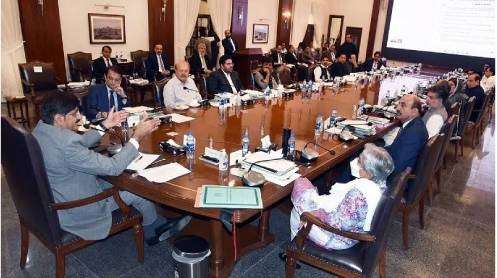
The cabinet, chaired by Sindh Chief Minister Syed Murad Ali Shah, approved the extension of EV incentives from May 30, 2026 to May 29, 2028, in a move aimed at encouraging cleaner and more affordable transportation across the province.
Under the extended incentive package, the registration fee for non-commercial EVs will remain at Rs1,000, while the annual motor vehicle tax will be fixed at Rs500. A luxury tax of Rs5,000 will apply to electric vehicles equivalent to 2,000cc and above.
Electric motorcycles will be subject to a one-time lifetime motor vehicle tax of Rs500, while the penalty for late registration has been set at Rs1,000.
The extension provides greater certainty for consumers and the EV industry and is expected to support the provincial government’s efforts to accelerate the adoption of electric mobility, reduce dependence on conventional fuels and promote cleaner transportation.
Local Government Reforms
The cabinet also formed a ministerial committee to review proposed amendments to the Sindh Local Government Act, 2013.
Under the proposed changes, the process for local government elections would begin 120 days before the expiry of a council’s term. Outgoing mayors and chairmen of district and town corporations would also be allowed to continue as administrators if elections are delayed.
The proposed amendments further seek a two-thirds majority for a no-confidence motion against union council and union committee chairmen and vice-chairmen, while assigning the deputy mayor or vice-chairman the role of convenor.
The package also proposes mapping public-service infrastructure, designating the chief executive of Karachi and future metropolitan corporations as Metropolitan Commissioner, and establishing Reconciliation Forums at union, town and municipal committee levels to facilitate amicable settlement of community disputes.
The Chief Minister constituted a sub-committee comprising Sharjeel Memon, Nasir Shah, Saeed Ghani, Ziaul Hassan Lanjar, Jam Khan Shoro, Adviser Najmi Alam and Special Assistant Saleem Baloch to review the proposals and submit recommendations before they are referred to the Sindh Assembly.
Digital Mapping of Katcha Areas
The cabinet approved a Rs705 million comprehensive survey and digital mapping of Katcha land across Sindh through the Survey of Pakistan on a government-to-government basis.
The project will cover approximately 1.61 million acres and include satellite imagery, GIS mapping, geodetic control, cadastral and parcel-level mapping, geo-tagging of land use, boundary demarcation and collection of ownership and land-use data.
The cabinet also approved the appointment of Dr Ashraf Wasti as an individual consultant for six months to provide technical assistance in preparing the forthcoming Provincial Finance Commission Award.
Wheat Support and Reserves
The cabinet reviewed measures to support small wheat growers ahead of the Rabi 2026-27 season, including targeted DAP subsidies and additional assistance for farmers who supplied wheat to the Sindh Food Department.
The indicative retail price of DAP was put at around Rs17,904 per bag, against a proposed federal subsidy of Rs3,500 per bag. Farmers who sold wheat to the Sindh Food Department will receive additional subsidy as an incentive for participating in government procurement.
The cabinet also approved fresh registration and revalidation of growers under the Sindh Wheat Growers Support Programme.
Officials informed the meeting that the previous programme had disbursed Rs27.336 billion in DAP subsidies to 333,127 growers and Rs14.428 billion in urea subsidies to 314,317 growers.
To strengthen wheat reserves, the cabinet approved procurement of 223,455 tonnes of wheat from Passco, with 130,000 tonnes to be transported to Karachi and more than 30,000 tonnes to Hyderabad and Jamshoro. Existing stocks at Passco warehouses in Shaheed Benazirabad and Sanghar will be retained for local requirements.
The cabinet was informed that Rs23.136 billion had already been released for wheat procurement and Rs2 billion for transportation. It also approved procurement of 300,000 tonnes of imported wheat through the Trading Corporation of Pakistan (TCP).
The decisions form part of a broader provincial strategy covering local governance, food security, land administration and the transition towards cleaner transportation, with the extension of EV incentives emerging as a key measure for promoting electric mobility in Sindh.