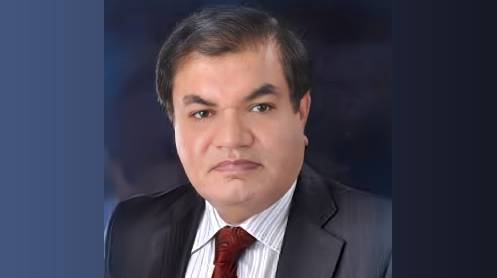
KARACHI, September 2, 2026: President Pakistan Businessmen and Intellectuals Forum and All Karachi Industrial Alliance, Chairman National Business Group Pakistan, Chairman Policy Advisory Board FPCCI and former Provincial Minister for Information Technology Mian Zahid Hussain has welcomed the proposed $6 billion investment to upgrade Pakistan’s five oil refineries, terming it a landmark decision that could significantly strengthen the country’s energy security.
He said the long-awaited refinery upgradation programme would reduce Pakistan’s dependence on imported finished petroleum products, conserve foreign exchange, improve domestic value addition and modernise the country’s refining industry through advanced technology.
Mian Zahid Hussain said PARCO, Pakistan Refinery Limited (PRL), National Refinery Limited (NRL), Cynergyico and Attock Refinery had confirmed their readiness to sign agreements under the government’s Brownfield Refinery Upgradation Policy. The agreements are expected to be signed in early September 2026, following which the refineries will undertake financial arrangements, engineering and other project-related activities.
He noted that the five refineries currently have a combined crude-oil processing capacity of approximately 350,000 barrels per day. Following the proposed upgrades, they will be able to produce environmentally cleaner Euro-V compliant petrol and diesel while converting a substantial quantity of low-value furnace oil into higher-value petroleum products.
According to the projected targets, domestic petrol production is expected to increase by 72 percent, from 10,700 tonnes to 18,400 tonnes per day, while high-speed diesel production would rise by 39 percent, from 21,240 tonnes to 29,520 tonnes per day. Furnace-oil production is expected to decline by 63 percent as more of it is converted into value-added products.
Mian Zahid Hussain said the project had assumed even greater importance amid geopolitical tensions and disruptions affecting global energy markets. Pakistan relies heavily on Gulf routes and the Strait of Hormuz for its imported oil and LNG, making the country vulnerable to disruptions in maritime trade, higher freight and insurance costs and fluctuations in international oil prices.
He said Pakistan could not control international conflicts or global oil prices, but it could reduce its exposure to external shocks by modernising its refineries, diversifying crude-oil supply sources and developing adequate strategic petroleum reserves. Greater refinery flexibility and storage capacity would provide the country with additional resilience during geopolitical crises.
He appreciated Prime Minister Muhammad Shehbaz Sharif and Federal Minister for Petroleum Ali Pervaiz Malik for addressing the prolonged policy delays and moving the refinery upgrade programme forward. However, he stressed that the proposed $6 billion investment must translate into actual projects without further delays.
“The signing of agreements should only be the beginning. The government must ensure that financing, engineering, construction and commissioning proceed according to a clearly defined timeline so that the benefits of the investment reach the national economy at the earliest,” he said.
Mian Zahid Hussain emphasised the need for long-term stability in taxation and government policies and a business-friendly environment to attract and sustain such large-scale investment. At the same time, he said all incentives extended to investors should be linked with clearly defined performance and completion targets.
He also called for independent monitoring to ensure that tariff protection and other incentives are utilised specifically for refinery modernisation and do not unnecessarily burden consumers.
He said timely completion of the projects would generate employment, promote technology transfer, improve environmental standards, increase domestic production of petroleum products and reduce Pakistan’s exposure to imported inflation.
“Any further delay would leave Pakistan unnecessarily vulnerable to future geopolitical shocks, rising international oil prices and pressure on its foreign exchange reserves,” Mian Zahid Hussain concluded.