ISLAMABAD: Five major Pakistani cities have been ranked among the world’s 10 least resilient cities to climate risk, highlighting the country’s growing vulnerability to extreme heat and other climate-related threats.
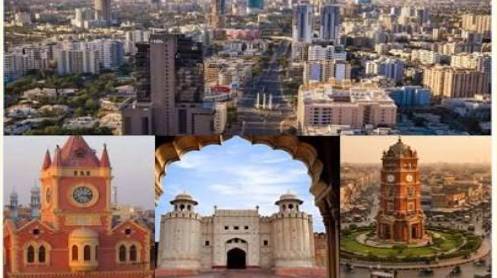
Hyderabad, Multan, Lahore, Faisalabad and Karachi featured among the 10 least resilient cities in a new assessment covering 72 major urban centres worldwide.
The report, prepared by Singapore-based geospatial analytics company AlphaGeo, assesses cities based on physical climate exposure and their capacity to adapt to associated risks.
According to the ranking, Hyderabad was placed second, Multan third, Lahore fifth, Faisalabad seventh and Karachi eighth among the least resilient cities. India’s Ahmedabad topped the list.
South Asia Faces Highest Climate Risk
The report noted that the six highest-risk major cities in the assessment are all located in South Asia, namely Ahmedabad, Hyderabad, Multan, Dhaka, Kolkata and Lahore.
The cities recorded high risk largely because of their exposure to extreme heat, while adaptation levels remain relatively low compared with the scale of physical climate risks.
The report said Dhaka had the highest physical exposure among the major cities assessed, with a physical risk score of 60. Despite an adaptation delta of 24 points, its residual RAJ score stood at 36, keeping it among the cities facing the highest remaining climate risk.
The assessment also identified Pakistan and Bangladesh as countries requiring particular attention because of the combination of high urban RAJ scores and limited capacity to close the adaptation gap at the pace required by their physical risk profiles.
Risks for Infrastructure and Investment
According to AlphaGeo, high RAJ scores have important implications for real-asset investors, particularly regarding potential property-value deterioration, infrastructure lifespans and operational continuity.
The report warned that countries where major cities continue to carry high RAJ scores without sufficiently improving their adaptation capacity could face increasing contingent liabilities related to disaster response, infrastructure repairs and population displacement.
For Pakistan, the findings underscore the need for stronger urban climate adaptation, heat-resilience measures and investment in infrastructure capable of withstanding increasingly severe climate-related risks.