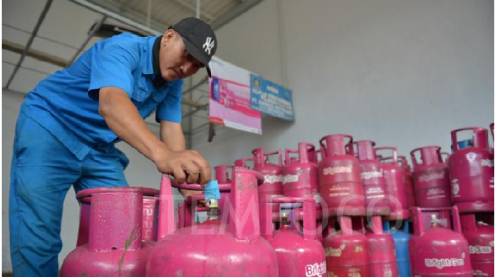
ISLAMABAD: The Oil and Gas Regulatory Authority (OGRA) and Petroleum Division have identified weaknesses in the LPG pricing formula and policy framework, saying the mechanism has contributed to significant differences between notified and actual market prices.
According to officials, the main issue is the exclusion of import parity from the existing LPG pricing formula. A policy revision considered necessary since 2023 remains pending.
The Petroleum Division told the National Price Monitoring Committee (NPMC) that a pricing framework originally designed for domestic LPG producers was later applied to importers, creating market distortions.
📍 Market price anomalies
- Gwadar: Rs330/kg
- Turbat: Rs350/kg
- Both areas border Iran.
The NPMC directed the Petroleum Minister, in consultation with OGRA, to address the gap between notified and actual LPG prices.
🥛 Food Quality Concerns Also Raised
The meeting also reviewed PCSIR testing of edible oil, ghee and milk, with officials reporting quality concerns in tested samples.
Key findings included:
- Elevated trans-fatty acids, peroxide value and free fatty acids in edible oil and ghee.
- Non-compliance with Vitamin A fortification requirements.
- Milk samples showing lower-than-prescribed protein and fat content.
The NPMC decided to develop a national framework for regular quality testing of essential food commodities.
The Ministry of National Food Security and Research will meet producers and industry associations and take corrective measures within 15 days. Quarterly random testing by PCSIR was also proposed.
Story by Zafar Bhutta