ISLAMABAD: For anyone looking to acquire a Pakistani power distribution company (Disco), the question is not simply how much the utility is worth—it is how much certainty comes with the investment. While the commercial opportunity is significant, so are the risks.
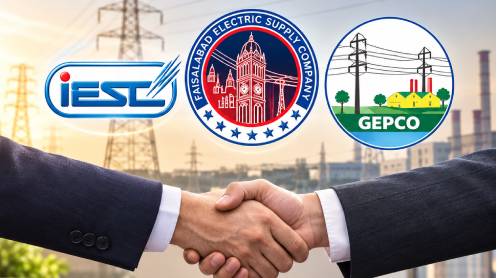
Unlike the Pakistan Steel Mills privatisation process, the Disco privatisation programme has moved at a considerable pace. Expressions of interest (EOIs) for Faisalabad Electric Supply Company (Fesco), Gujranwala Electric Power Company (Gepco) and Islamabad Electric Supply Company (Iesco) have attracted 12, 11 and 10 submissions, respectively.
Foreign interest has primarily come from Turkish companies, while several major Pakistani business groups are also participating.
On the surface, this is precisely what the government sought: credible investors willing to bring private capital, management expertise and operational improvements to some of Pakistan’s largest electricity distribution networks.
For investors, however, the key question is different.
It is not only, “What can I earn from this Disco?” but also, “What can change after I invest?”
K-Electric Offers a Key Case Study
K-Electric (KE), Pakistan’s only privately owned and vertically integrated power utility, provides perhaps the most relevant case study for investors evaluating the Discos.
KE’s experience demonstrates that private ownership can support significant capital investment and operational transformation. However, the regulatory framework surrounding those investments remains a critical consideration.
Regulatory predictability is a fundamental component of an asset’s value. The greater the uncertainty, the higher the return an investor is likely to demand for assuming the additional risk. This creates a direct link between regulatory certainty and the price Pakistan can ultimately obtain for its Discos.
KE’s tariff experience illustrates the issue.
An investor can seek to control operating costs, improve recoveries, reduce losses and invest in the distribution network. It cannot, however, independently determine the tariff through which those investments are recovered.
Delayed regulatory decisions and revisions to previously determined tariffs can materially alter the economics of an investment.
KE’s tariff for FY2017-23 was determined by the National Electric Power Regulatory Authority (Nepra) in 2017 but went through extensive review and delays, with the final notification issued in 2019. For the utility, this meant operating for an extended period with limited visibility over its eventual financial returns.
The framework itself was designed around performance incentives. KE was not guaranteed a fixed profit but was provided efficiency incentives and a clawback mechanism under which returns above specified levels could be shared with consumers.
From a policy perspective, the objective was clear: encourage the private utility to improve efficiency while allowing consumers to benefit from those gains.
For an investor, however, the calculation is more complicated: how much of the efficiency gains can actually be retained, and how predictable will the return on invested capital be?
Financing Risk Matters
The issue becomes particularly important when an investor must finance network improvements without the same sovereign backing available to many state-owned power entities.
During the 2017 tariff determination proceedings, KE argued that, unlike independent power producers (IPPs) benefiting from long-term contracts and sovereign guarantees, it did not have a sovereign guarantee and therefore carried greater risk. The company cited this risk in arguing for a higher tariff.
The experience also highlights what happens when a seven-year regulatory period ends.
The FY2017-23 tariff did not simply expire on June 30, 2023, followed immediately by a new tariff from July 1. Several issues relating to the period continued into subsequent regulatory proceedings.
That is precisely the type of uncertainty investors factor into their valuations.
Capital Investment Needs Regulatory Certainty
The current tariff process, culminating in the notification of the FY2024-30 tariff on September 23, 2026, has again highlighted the consequences of prolonged regulatory uncertainty.
For an investor, the issue is not simply how long a tariff determination takes. The timing can directly affect a capital-intensive business.
A utility has to invest today in feeders, transformers, substations, meters, automation and network reinforcement. Its financial model, however, depends on how those investments are recognised and remunerated under the regulatory framework.
Discos are fundamentally different from ordinary businesses. Investors cannot simply respond to higher costs by increasing electricity prices. Tariffs, investment allowances, efficiency benchmarks and other components of the revenue model remain subject to regulatory processes.
What Investors Are Seeking
According to reporting on the Privatisation Commission’s market-sounding exercise, prospective investors have sought longer tariff guarantees, potentially extending seven to 10 years, along with greater regulatory certainty and operational flexibility.
Investors have also sought stronger protection against future changes to agreed contractual terms and greater predictability in tariff decisions.
The government wants private investors to pay for the future potential of these companies. Investors, meanwhile, will factor the cost of every uncertainty they cannot quantify into their valuations.
That is the risk premium.
The challenge for Pakistan, therefore, is not simply to attract investors to the Disco privatisation process. It is to establish a framework in which the risks are clearly defined, measurable and enforceable.
The ultimate test of the privatisation programme may not be whether investors are willing to enter the process, but whether Pakistan can provide sufficient regulatory certainty for them to place a meaningful value on these strategically important power distribution companies.
Story by Khalid Mustafa