ISLAMABAD: The government is expediting measures to improve regulatory predictability and is considering political risk guarantees from multilateral agencies to address investor concerns and attract bidders for the privatisation of power distribution companies (Discos).
Informed sources said prospective local and foreign investors currently conducting due diligence on the first batch of Discos had raised concerns over contract sanctity following the reopening of independent power producers’ (IPPs) agreements and recent legal developments involving K-Electric.
Potential bidders have sought binding legal guarantees, clearer financial risk allocation and safeguards against the reopening of contracts after privatisation. They have also demanded licence tenures longer than the existing 20-year period for Discos.
The concerns come as the government prepares to move ahead with the privatisation process amid growing uncertainty over the regulatory and contractual environment in the power sector.
Interestingly, Prime Minister’s Adviser on Privatisation Muhammad Ali, who was involved in IPP renegotiations that resulted in revised contracts during previous PTI and PML-N governments, is now facing questions from prospective investors regarding the durability of regulatory and contractual guarantees.
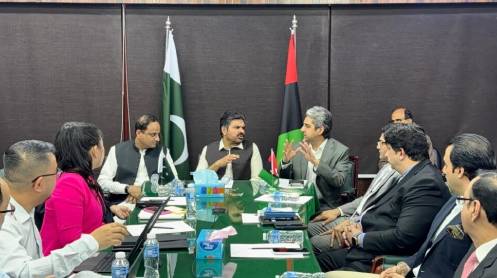
Against this backdrop, Finance Minister Muhammad Aurangzeb on Wednesday chaired a meeting of the Steering Committee on Power Sector Regulatory Regime and Reform Options to advance reforms aimed at strengthening the sector’s regulatory framework and promoting efficiency, investment, competition and greater private-sector participation.
The finance minister said the evolving power sector required a regulatory framework capable of responding to technological developments while ensuring efficiency, protecting consumer interests and encouraging investment and private-sector participation, according to an official statement.
The meeting coincided with a stay order issued by the Sindh High Court against recent decisions of the National Electric Power Regulatory Authority (Nepra) and its appellate tribunal concerning K-Electric’s Multi-Year Tariff (MYT).
The decisions had effectively curtailed the federal government’s subsidy to K-Electric by around Rs200 billion. K-Electric challenged the Nepra and appellate tribunal decisions before the SHC, which suspended the relevant notifications and orders and issued notices to the respondents for the next hearing on October 15.
The finance minister-led committee also reviewed the broader transformation of Pakistan’s power sector, including the rapid growth of solarisation and changing electricity demand patterns.
According to the official statement, the committee examined major structural and emerging challenges, including legacy capacity obligations, changing grid-demand patterns, service quality, investment constraints and the need to strengthen incentives for efficiency.
The discussion also focused on improving regulatory predictability, better targeting of subsidies and strengthening the overall investment climate to create a more efficient, competitive and financially sustainable power sector.
Mr Aurangzeb called for a market structure that provides clearer incentives for efficiency and improved service quality while creating greater opportunities for competition, private-sector participation and investment.
The government’s efforts to strengthen the regulatory framework are particularly significant as it seeks to attract private investment into Discos and address concerns over the long-term stability of contracts and regulatory decisions.
For prospective investors, the success of the privatisation process will depend not only on the financial viability of the distribution companies but also on the credibility, predictability and enforceability of the regulatory framework governing their operations.
Story by Khaleeq Kiani