Healthy foods and exercise, along with treatment, can help in early cure of breast cancer: moot told
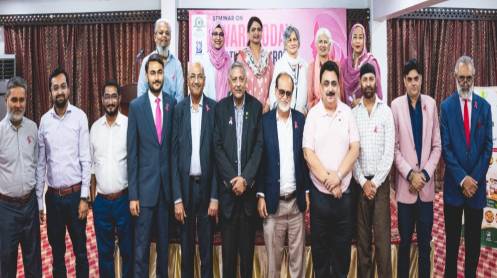
Thank you for reading this post, don't forget to subscribe!Karachi: Timely mammograms can detect breast cancer earlier—potentially by an average of two years—giving women a better chance of receiving effective treatment before the disease advances, leading oncologists and survivors stressed at a Pink October awareness seminar organised by the National Forum for Environment & Health (NFEH).
The experts urged women not to delay examinations because of fear, embarrassment or misconceptions about diagnostic procedures, emphasising that early detection, prompt treatment and emotional support can make a crucial difference.
Dr Rufina Soomro, senior oncologist and Head of the Breast Surgery Department, said mammography was a specialised breast X-ray that could identify abnormalities before they became clinically apparent.
She said it had no lasting adverse effects and could help diagnose cancer at an earlier stage, when treatment was generally more effective and potentially less prolonged.
Speaking as keynote speaker at the seminar, organised as part of the World Health Organisation’s global Pink October breast cancer awareness campaign, Dr Soomro recommended that women aged 40 and above discuss mammography with their healthcare providers, with screening at two-year intervals where appropriate. She also emphasised regular clinical examinations and breast self-awareness.
She warned that breast cancer accounted for up to 35 per cent of all cancers among women in Pakistan, with approximately one in eight to nine women facing a lifetime risk. Pakistani women, she added, were diagnosed around a decade earlier, on average, than women in Western countries, underscoring the need for awareness and timely medical attention.
Dr Soomro said qualified healthcare professionals could perform physical breast examinations, while trained midwives could help expand access to preliminary screening. She stressed that a biopsy remained the most definitive way to establish a diagnosis when cancer was suspected and urged women not to fear the routine procedure.
She also cautioned that pain was not usually an early warning sign. Women should seek medical advice about unusual breast changes rather than wait for pain to develop.
Discussing prevention, Dr Soomro identified smoking, alcohol consumption and obesity as factors associated with increased risk. She encouraged women to undertake around four hours of physical activity each week, maintain a balanced diet and adopt healthier lifestyles. She noted that breastfeeding was associated with reduced risk and discussed reproductive factors, including the age at which a woman has her first child.
Mahanaz Rahman, former Karachi Resident Director of the Aurat Foundation and a breast cancer survivor, urged women to overcome hesitation and seek timely medical advice, diagnosis and treatment.
Diagnosed at 75, Rahman said awareness campaigns must reach women through channels they use daily. She called on mobile phone companies to revive breast cancer messages as caller tunes, particularly during October, recalling an earlier nationwide campaign led by Pakistan’s then First Lady.
Rahman said those caller tunes had motivated her to seek diagnosis after she noticed early symptoms, showing how a simple awareness initiative could prompt a potentially lifesaving step.
She also called for specialised counselling services for women facing the emotional burden of cancer, saying they needed reassurance and guidance rather than additional psychological pressure.
Dr Isra Hyder Shaikh, an expert psychiatrist, emphasised accessible mental health services for women undergoing treatment and their close relatives. Psychological support, she said, could help patients and caregivers maintain morale and emotional wellbeing.
Dr Zubala Yasir Lutfi, a food and nutrition expert, highlighted the importance of a balanced diet containing essential nutrients to support overall health and immune function, stressing that nutrition should form part of broader disease-prevention efforts.
Senior journalist and breast cancer survivor Afia Salam underlined the need for vigilance among younger women, particularly those with a family history. She urged them to seek professional advice about individual risk and appropriate screening, given the possible role of hereditary and genetic factors.
NFEH Secretary General Ruqiya Naeem, herself a breast cancer survivor, called on provincial governments, civil society, the corporate sector, non-profit organisations and philanthropists to establish a nationwide network of affordable screening, diagnostic and treatment facilities.
She said women in rural and underprivileged areas often could not afford services available in major cities, resulting in delayed diagnosis and treatment. Mobile medical vans equipped with breast screening and mammography facilities should be deployed to remote areas, she added.
Naeem stressed that awareness must translate into affordable diagnostics, timely referrals, accessible treatment and sustained public education, so that financial circumstances or location did not determine a woman’s access to care.
NFEH President Muhammad Naeem Qureshi called on the government and relevant regulatory authorities to investigate environmental factors potentially contributing to Pakistan’s rising cancer burden and reduce pollution-related public health risks.
The seminar concluded with a call for stronger prevention, wider screening access, improved awareness and compassionate support for patients and families. Speakers stressed that timely medical attention, evidence-based screening, early diagnosis and coordinated healthcare services were essential to reducing breast cancer’s toll and helping more women receive treatment before the disease progresses.