
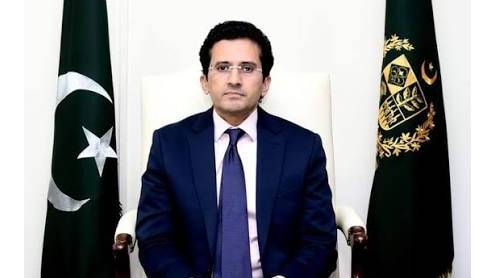
ISLAMABAD: Petroleum Minister Ali Pervaiz Malik has assured consumers that the government will make every possible effort to ensure adequate supplies of liquefied petroleum gas (LPG) during the winter months and maintain uninterrupted piped gas availability for domestic consumers during mealtimes.
Thank you for reading this post, don't forget to subscribe!The assurance comes amid disruptions in LPG supplies following the closure of Iranian border crossings, which has pushed cylinder prices in the open market to nearly twice the officially notified rates. LPG is widely used for cooking, transportation, particularly rickshaws, and other domestic and commercial purposes, especially in areas without piped gas connections.
Addressing a press conference in Islamabad, Malik said the government was prepared to procure even expensive fuel to meet domestic requirements during the peak winter months of December and January. He said additional liquefied natural gas (LNG) supplies would be arranged for the piped gas network if necessary to meet consumer demand.
The minister emphasised that ensuring domestic gas availability during breakfast, lunch and dinner would remain the government’s priority, while LPG would be arranged for consumers without piped connections and other requirements.
Commenting on petroleum prices, Malik referred to the recent reduction in fuel rates and said international oil markets had closed lower on Tuesday, expressing optimism that further positive developments could emerge in the next price revision.
He also explained that under a recently announced arrangement, oil refineries would absorb a cumulative financial impact of Rs15 billion over 30 days through their contribution to the petroleum levy, enabling a reduction of Rs14.71 per litre in petrol prices for consumers.
The government was also exploring a similar mechanism for LPG to provide relief to consumers, he added.
Malik acknowledged that Pakistan was facing significant challenges in maintaining LPG supplies following disruptions along its western border. He said some market operators were exploiting the shortage, selling LPG at Rs700-800 per kilogramme.
Providing details of the country’s LPG requirements, the minister said annual demand stood at approximately 2.4 million tonnes, equivalent to 6,500-7,000 tonnes per day. Domestic production accounts for around 2,000-2,500 tonnes daily, depending on the type of crude oil being processed and refinery output.
He said nearly half or more than half of the country’s LPG requirements had traditionally been met through imports from the western border, where supply disruptions had created difficulties. The remaining demand was being supported through two terminals operated by Engro and SSGC LPG, which have a combined storage capacity of approximately 14,000 tonnes.
The petroleum minister said the government was working to strengthen Pakistan’s energy security infrastructure, particularly in fuel storage, refining capacity and the LPG supply chain. He regretted that insufficient investment had been made in these critical areas in previous years, leaving the country vulnerable to international supply disruptions.
Referring to the impact of regional conflicts on energy markets, Malik said the current situation had exposed serious weaknesses in Pakistan’s energy infrastructure. Prime Minister Shehbaz Sharif, he added, was personally leading efforts to rebuild the country’s energy security framework and introduce necessary structural improvements.
He pointed out that the global LPG transportation market had increasingly shifted towards refrigerated and cryogenic cargoes, while Pakistan continued to face limitations in handling larger vessels. Small pressurised LPG carriers were difficult to secure, while very large gas carriers (VLGCs) and very large crude carriers (VLCCs) could not dock at existing facilities.
Malik questioned how the country could accommodate additional imports without adequate port infrastructure and storage capacity.
He said domestic consumers would receive priority, with available gas supplies allocated around the three principal mealtimes. Domestic gas demand was expected to increase by 400-500 million cubic feet per day (mmcfd) during winter, requiring corresponding adjustments in supplies to other sectors.
The minister added that the prime minister had also directed authorities to make alternative arrangements for regasified liquefied natural gas (RLNG) to meet power sector requirements. However, he said Pakistan was adequately covered for both domestic and power sector needs during November.
LPG Sector Reforms and Market Competition
Speaking at the same press conference, Information Minister Attaullah Tarar said the government was committed to protecting public interests despite difficult economic and energy conditions.
He highlighted recent reforms in the LPG sector, stating that monopolies had been abolished, the quota system that allowed a limited number of operators to benefit from market arrangements had been eliminated, and discretionary powers had been reduced to introduce greater transparency and competition.
Tarar said the prime minister had directed the petroleum minister to prepare a comprehensive winter LPG supply plan and ensure that domestic consumers did not face gas shortages during mealtimes.
He added that the government had introduced structural reforms, improved transparency and directed the Oil and Gas Regulatory Authority (OGRA) to publish relevant pricing and sector information on its website.
Explaining the LPG pricing mechanism, Malik said Saudi Aramco determined international LPG prices through its monthly Contract Price (CP), similar to the role of international benchmarks such as Platts in the oil market. OGRA subsequently notified domestic LPG prices based on the applicable pricing mechanism.
He said the government had limited direct control over international price movements but remained committed to ensuring that consumers received LPG at fair and competitive rates.
The minister explained that OGRA had recently increased the notified LPG price following Aramco’s announcement of a contract price of $756 per tonne, compared with $540 per tonne in March.
He maintained that the government could not sell imported fuel domestically at prices substantially below international market rates without incurring significant financial costs.
Malik also highlighted shortcomings in the existing LPG pricing framework, explaining that under the 2016 LPG Policy, OGRA determined prices for locally produced LPG based on Aramco’s notified Contract Price or Free on Board (FOB) benchmark.
While the arrangement had worked when domestic production was sufficient, rising demand and increasing dependence on imports had exposed its limitations. Currently, around 70 per cent of the country’s LPG requirements are being met through imports, making the existing FOB-based pricing mechanism inadequate to cover additional import costs.
He said the pricing structure had encouraged some market participants to turn towards informal supply channels rather than importing LPG through formal channels.
To address these issues, the government has decided to open the LPG sector to greater competition, encourage formal imports and ensure the availability of competitively priced fuel.
The minister further said that Pakistan State Oil (PSO), SSGC LPG and Pakistan LNG Limited had been directed to arrange bulk LPG procurement through government-to-government (G2G) and business-to-business (B2B) agreements to address market shortages, improve supply chains and discourage cartelisation.
He said these state-owned companies had already made considerable progress in advancing bulk procurement arrangements.