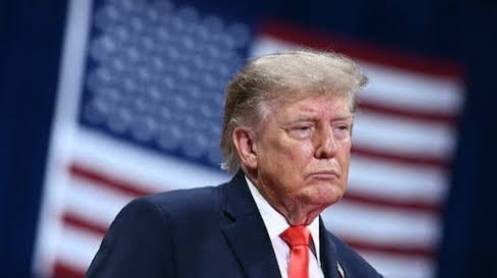
WASHINGTON: Democrats have secured projected victories in both chambers of the US Congress in the 2026 midterm elections, delivering a major political setback to President Donald Trump and his Republican Party, according to media projections.
Thank you for reading this post, don't forget to subscribe!The sweeping Democratic gains in the House of Representatives and Senate will give the opposition party significant powers to block Trump’s legislative agenda, investigate his administration and challenge key policy decisions during the final two years of his presidency.
The election results reflected widespread voter dissatisfaction over rising living costs, trade tariffs, higher fuel prices and Trump’s military conflict with Iran, which has intensified economic pressures across the country.
Despite his history of questioning election results, Trump initially adopted a conciliatory tone, telling The New York Times that he was willing to accept the outcome and work with Democrats. However, shortly afterwards, he posted an image of a red baseball cap bearing the word “VETO” on social media, signalling his intention to oppose Democratic legislative initiatives.
Democrats Make Historic Gains in Republican Strongholds
The Democrats’ breakthrough victories in Kansas and Iowa proved decisive in their campaign to take control of the Senate. In Kansas, Methodist minister Adam Hamilton defeated Republican incumbent Roger Marshall, becoming the first Democrat elected to the Senate from the traditionally Republican state since 1932.
In Iowa, Democrats secured a Senate victory for the first time since 2008, further demonstrating the scale of their gains in Republican strongholds.
These victories followed Democratic successes in Texas, South Carolina, North Carolina and Ohio, where several Republican candidates backed by Trump suffered defeats.
In Texas, Democrat James Talarico defeated Republican candidate and state Attorney General Ken Paxton in the Senate race. Talarico said his victory represented a challenge to powerful political and economic interests, including Trump, technology billionaire Elon Musk and the Washington establishment.
Democrats also secured the Texas governorship through Gina Hinojosa, ending decades of Republican control of the state’s top office.
The party retained key Senate seats, including Jon Ossoff’s victory in Georgia, as well as an open seat in New Hampshire.
Becerra Wins California Governorship
In California, Democrat Xavier Becerra defeated Trump-backed Republican candidate Steve Hilton in the gubernatorial election, according to US media projections.
Becerra, who previously served as US Secretary of Health and Human Services under former President Joe Biden, maintained a substantial lead over Hilton in partial results.
The son of Mexican immigrants, Becerra will become California’s first elected Latino governor. He will succeed outgoing Governor Gavin Newsom, who was barred from seeking another term.
Addressing supporters in Sacramento, Becerra declared the beginning of a new political era for California, saying his campaign had focused on delivering results for all residents, regardless of their political affiliations.
Hilton, a British-born conservative commentator and former adviser to UK Prime Minister David Cameron, conceded defeat, acknowledging the difficult political environment facing Republican candidates nationwide.
Republicans previously held a 53-47 majority in the Senate, but Democratic gains in six Republican-held seats proved sufficient for major US networks to project a change in control, with some races still unresolved.
Democrats Capture House, Expand State-Level Influence
Democrats also gained control of the House of Representatives after defeating Republican candidates in several competitive districts across Pennsylvania, New Jersey, Kentucky, Arizona and North Carolina.
Some of their victories came in constituencies that had strongly supported Trump in the 2024 presidential election, highlighting the scale of the political shift.
In Indiana, Democrat J.D. Ford defeated Republican Congresswoman Victoria Spartz in a district Trump had won by 17 percentage points in 2024.
Democrats also made significant gains in state-level elections. Former Atlanta Mayor Keisha Lance Bottoms won the Georgia governorship, becoming the first Black woman elected governor in US history, according to media projections.
In Florida, however, Republicans secured some notable victories. Trump-backed Byron Donalds won the governorship, becoming the state’s first Black governor, while Republican Senator Ashley Moody retained her Senate seat.
George Washington University professor Todd Belt described the Democratic gains as a major rejection of Trump’s leadership and policies, citing concerns over the economy, corruption and the conflict with Iran.
Trump Faces Stronger Congressional Opposition
The Democratic takeover of Congress is expected to significantly constrain Trump’s legislative priorities. With control of both chambers, Democrats will be positioned to block legislation, investigate allegations involving the administration, scrutinise the Iran conflict and examine federal immigration enforcement policies.
They will also gain considerable influence over Senate confirmation proceedings for judicial appointments and senior government nominees.
Democratic Congressman Robert Garcia, expected to lead the powerful House Oversight Committee, warned Republicans to prepare for investigations, while House Democratic Leader Hakeem Jeffries said Trump’s MAGA movement was facing a nationwide political retreat.
Jeffries could also become the first Black Speaker of the House when the new Congress convenes in January, subject to election by fellow members.
Economic concerns emerged as a central factor influencing voters. Rising rents, grocery bills, utility costs and property taxes were among the issues frequently cited by voters during the campaign.
Democratic Senator Jon Ossoff, projected to retain his Georgia seat, described the results as a decisive rejection of what he called the corruption and incompetence of Trump’s administration.
Exit polls conducted by SSRS for a consortium of US media organisations indicated that approximately half of voters viewed the midterm elections as an opportunity to rebuke Trump. Around three-quarters said they were angry or dissatisfied with the country’s direction, while 70 per cent wanted Congress to exercise stronger checks and balances over presidential power.
Historically, the president’s party has generally lost congressional seats in midterm elections, with only two exceptions since World War II. Trump’s declining approval ratings, rising energy costs, import tariffs and the conflict with Iran further contributed to Republican difficulties.
Controversy Over Federal Election Monitoring
The elections also attracted controversy over the federal government’s monitoring arrangements. The US Justice Department deployed approximately 1,000 election monitors and observers across all 50 states, describing the operation as the largest Election Day monitoring effort in the country’s history.
Democrats criticised the initiative, raising concerns that federal monitoring could intimidate voters, particularly in jurisdictions that had supported Democratic candidate Kamala Harris in the 2024 presidential election.
Election officials in several states reported no major problems. However, New Mexico’s Secretary of State’s office said it had received reports of federal monitors asking unusual questions in one county, prompting the Justice Department to assure officials that the matter would be addressed.
The Democratic victories mark a significant shift in Washington’s political balance, setting the stage for intensified congressional scrutiny of Trump’s administration and a potentially difficult final two years of his presidency.
By AFP / Reuters