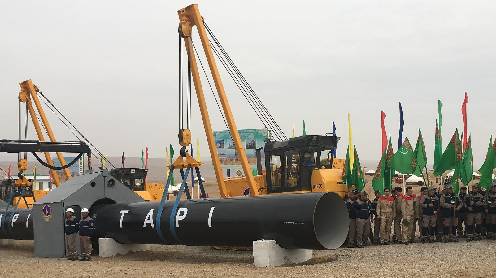
ISLAMABAD: Turkmenistan has emphasised the strategic importance of the Turkmenistan-Afghanistan-Pakistan-India (TAPI) gas pipeline, describing it as a major regional energy project capable of strengthening Pakistan’s energy security, supporting industrial growth and promoting economic integration.
Thank you for reading this post, don't forget to subscribe!Addressing a news conference at the Turkmenistan Embassy on Friday, Ambassador and Dean of the Diplomatic Corps Atadjan Movlamov said relations between Turkmenistan and Pakistan were important not only for the two countries but also for the wider region.
He identified energy, trade, transport and regional connectivity as key areas offering significant potential for bilateral cooperation.
The ambassador said TAPI was at the centre of this partnership. The ambitious pipeline project is designed to transport natural gas from Turkmenistan’s Galkynysh field through Afghanistan to Pakistan and beyond. The field is estimated to hold approximately 27 trillion cubic metres of natural gas, making it a major resource for regional energy security and economic development.
Movlamov said the project could help Pakistan diversify its energy supplies, improve energy security, support industrial expansion and create new economic opportunities. Its successful implementation would also strengthen cooperation and deepen economic ties among participating countries.
He also highlighted complementary infrastructure initiatives that could further enhance regional connectivity. These include a proposed 1,635-kilometre fibre-optic communication line along the TAPI corridor, with a planned transmission capacity of up to 100 Gbps.
Another proposed initiative is the Turkmenistan-Afghanistan-Pakistan (TAP) electricity transmission project, which envisages exporting up to 3,000 megawatts of electricity to Pakistan through Afghanistan.
According to the ambassador, these projects could help Pakistan strengthen its energy and telecommunications infrastructure while creating opportunities for regional trade, investment and economic integration.
He added that improved transport and railway links between the two countries could facilitate commercial exchanges and connect Central Asian markets with South Asia.
Movlamov also noted that Turkmenistan was marking the 35th anniversary of its independence this year, with a renewed focus on national development, international diplomacy, economic cooperation and regional connectivity.
The anniversary is being celebrated under the national theme, “Independent, Permanently Neutral Turkmenistan, Homeland of Purposeful Heavenly Horses,” reflecting the country’s national identity, cultural heritage, development achievements and commitment to its internationally recognised policy of permanent neutrality.