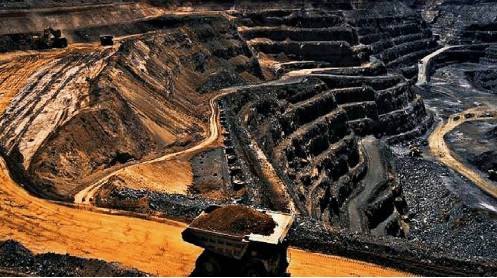
ISLAMABAD: The government is planning to shift imported coal-fired power plants to locally produced Thar coal, aiming to reduce dependence on imported fuel, lower electricity generation costs and strengthen energy security through improved rail connectivity.
Thank you for reading this post, don't forget to subscribe!Under the plan, the federal and Sindh governments will jointly develop a railway network to transport Thar coal to power plants operating on imported coal, as well as industrial manufacturing units across the country.
Several imported coal-based power plants were established during the Pakistan Muslim League-Nawaz (PML-N) government under the China-Pakistan Economic Corridor (CPEC), including the Sahiwal power plant, which relies on coal imported from different countries.
The proposed railway infrastructure is expected to enable the transportation of indigenous Thar coal to these facilities, reducing the country’s reliance on imported fuel. The initiative has gained further significance amid disruptions to international fuel shipments following the closure of the Strait of Hormuz during the US-Iran conflict.
The matter was discussed at a recent meeting of the Economic Coordination Committee (ECC) of the Cabinet, where the Ministry of Railways briefed participants on the progress of the Thar coal rail connectivity project being undertaken jointly with the Sindh government.
The ministry informed the ECC that the project was being implemented under a memorandum of understanding (MoU) signed between the Ministry of Railways and the Government of Sindh, followed by a joint venture agreement between the two sides.
The Executive Committee of the National Economic Council (ECNEC) has already approved the Public Sector Development Programme (PSDP) project titled “Thar Coal Rail Connectivity with the Existing Railway Network, Including Last-Mile Connectivity with Port Qasim.” The project aims to ensure the efficient utilisation of Pakistan’s indigenous Thar coal reserves.
The rail network is designed to facilitate coal supplies not only to independent power producers (IPPs) currently operating on imported coal but also to industrial sectors, including cement, urea and steel manufacturing.
According to the Ministry of Railways, the project will be financed equally by the federal and Sindh governments. The federal government will contribute 50% of the total cost through the PSDP, while the remaining 50% will be provided by the Sindh government through its Annual Development Plan (ADP). Both contributions will be made on an equal matching and timely basis to prevent cost overruns, implementation delays and contractors’ claims.
The joint venture agreement between the two governments has already been signed.
The ministry further informed the ECC that Rs2 billion had been allocated under the PSDP for the ongoing financial year 2026-27. Meanwhile, the Sindh government had also transferred funds to the federal government’s Account-I for the project.
However, a technical supplementary grant was required to provide budgetary cover for the utilisation of the transferred funds. The proposed supplementary grant of Rs10 billion was described as a budgetary arrangement against funds already provided by the Sindh government and, therefore, would not create an additional fiscal burden on the federal government.
Officials believe that switching imported coal-fired power plants to indigenous Thar coal could reduce electricity generation costs and lower the country’s fuel import bill. Industries, particularly cement manufacturers, are also expected to benefit from access to a relatively cheaper domestic fuel source.
Story by Zafar Bhutta