ISLAMABAD: Pakistan’s two highest project-approval forums have directed a high-level inquiry into alleged procedural lapses by the Water and Power Development Authority (Wapda) in the selection of consultants, project delays and weaknesses in the design of the Rs316.4 billion Tarbela 5th Extension Hydropower Project.
Thank you for reading this post, don't forget to subscribe!Official documents reveal that the Central Development Working Party (CDWP) and the Executive Committee of the National Economic Council (ECNEC) directed the formation of a committee under the federal minister for water resources to examine the issues and ensure transparency in the project’s execution.
The CDWP issued the instructions in May this year, followed by ECNEC in August when it approved the revised project cost. However, a Planning Commission official said the proposed committee had not yet been constituted.
Following the CDWP’s decision, the Planning Commission wrote to the Ministry of Water Resources in June, requesting the formation of the committee. The ministry is responsible for sponsoring the project. Neither Wapda nor the Ministry of Water Resources responded to queries regarding action taken on the government’s directives.
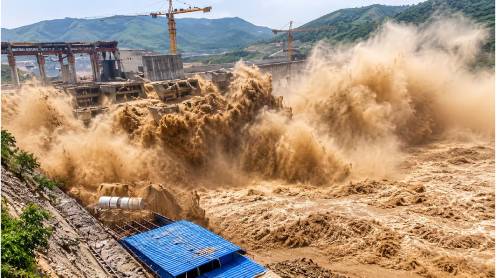
The development has gained further significance following Monday’s incident at the Tarbela T-5 Hydropower Project, where a breach in a protective embankment resulted in water entering Tunnel-5, forcing the suspension of construction activities.
According to a report published in The Express Tribune, citing a Wapda statement, a weak rock mass collapsed during excavation of the second bench of the tunnel, allowing water from the Intake Pit to enter the tunnel and powerhouse area.
Wapda said the water from the Intake Pit had been completely drained and no further water was entering the downstream work sites. Dewatering operations at the under-construction powerhouse had also commenced.
The authority clarified that the main tunnel, powerhouse, tailrace culvert and switchyard had not sustained any damage, rejecting reports of a tunnel collapse.
The Tarbela 5th Extension Project aims to convert the existing fifth irrigation tunnel of Tarbela Dam into a hydropower facility, adding 1,410 megawatts (MW) to the dam’s existing generation capacity.
Currently, Tunnel-5 is primarily used to release irrigation water when the reservoir level falls below the minimum spillway operating level and releases from existing power units are insufficient. Following installation of the powerhouse, the tunnel will continue serving its irrigation function while also diverting water for electricity generation.
According to the official record, Planning Minister Ahsan Iqbal, while chairing the CDWP meeting in May, raised serious concerns over Wapda’s handling of the project, particularly the selection of consultants, implementation delays, weaknesses in the design and rising costs.
The CDWP subsequently recommended that the strategically important project be placed before ECNEC for approval, while calling for a high-level committee to examine the alleged shortcomings.
The proposed committee was tasked with reviewing consultant selection, changes in the project scope resulting from design modifications, variation orders and the rationalisation of the revised PC-I cost. The objective was to ensure transparency and prevent mismanagement during implementation.
ECNEC, headed by Deputy Prime Minister Ishaq Dar, endorsed the recommendation while approving the revised project in August. It directed the authorities to complete the work according to the approved timelines and ensure that no further cost escalation occurred.
The revised PC-I was approved at a total cost of Rs316.4 billion, including foreign financing of Rs180.7 billion.
ECNEC also directed the formation of a high-level committee under the federal minister for water resources, with the Planning Commission’s Member Infrastructure and Member Monitoring and Evaluation as members, to investigate procedural lapses, consultant selection, design-related changes, variation orders and project cost rationalisation.
During the first week of November, the Planning Ministry issued authorisation orders and asked the Ministry of Water Resources to grant administrative approval in accordance with ECNEC’s decision.
The approved implementation period for the project extends until June 2028.
The latest incident at the T-5 site has renewed attention on project management, engineering oversight and construction safety, particularly given the project’s strategic importance to Pakistan’s hydropower generation and water management infrastructure.
Story by Shahbaz Rana