ISLAMABAD: The International Monetary Fund (IMF) has urged Pakistan to phase out its existing petroleum subsidy scheme, emphasising that any future relief provided in response to rising global oil prices should be temporary, limited in scope and targeted exclusively at vulnerable segments of society.
Thank you for reading this post, don't forget to subscribe!According to Arab News, an IMF spokesperson said Pakistan’s ongoing fuel subsidy programme should be gradually withdrawn because of its broad coverage and high fiscal costs.
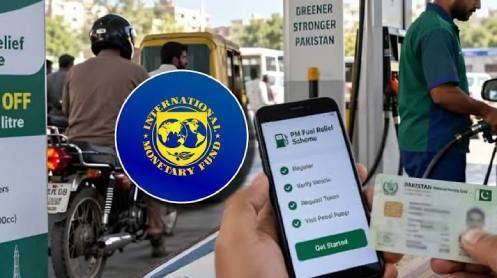
Pakistan introduced the fuel subsidy scheme in September to protect low-income households from rising petroleum prices amid the conflict between the United States and Iran. Under the programme, motorcyclists and rickshaw users receive weekly fuel tokens worth Rs500, while owners of vehicles with engines up to 800cc are eligible for a discount of Rs100 per litre on a maximum of 10 litres of petrol every 10 days.
The IMF spokesperson said that if international oil prices rise beyond expectations, any future financial assistance should be restricted to specific vulnerable groups and provided for a limited period. The associated expenditure should also be accommodated within the limits of the approved FY2026-27 budget.
The spokesperson reiterated that Pakistan had committed under its $7 billion Extended Fund Facility (EFF) programme to keeping domestic petroleum prices aligned with international market rates while taking measures to mitigate the impact on vulnerable households.
The IMF also warned that the ongoing conflict in the Middle East poses a significant challenge to Pakistan’s economic outlook, given its reliance on oil and gas imports from Gulf countries. Disruptions to international shipping and the closure of the Strait of Hormuz have affected the economic prospects of developing countries, while higher global oil prices have already intensified inflationary pressures in Pakistan.
According to the Pakistan Bureau of Statistics, inflation stood at 9.6 percent year-on-year in October, compared with 10.3 percent in September.
The IMF cautioned that continued volatility in international oil prices could adversely affect Pakistan’s economic outlook. It stressed that the country’s policy priorities should remain focused on maintaining macroeconomic stability, strengthening public finances, improving competitiveness and productivity, and reinforcing social protection systems and human capital development.
The Fund also called for reforms in state-owned enterprises, improvements in public service delivery and measures to ensure the financial sustainability of the energy sector.
Last month, following discussions with Pakistani authorities in Karachi and Islamabad, the IMF reached a staff-level agreement with Pakistan. The agreement is subject to approval by the Fund’s Executive Board.
Upon approval, Pakistan is expected to receive approximately $1 billion under the EFF and an additional $210 million under the Resilience and Sustainability Facility (RSF). This would bring total disbursements under the IMF programme to approximately $5.7 billion.
According to the IMF spokesperson, the Executive Board meeting to consider Pakistan’s EFF and RSF reviews, along with the 2026 Article IV consultation, is expected next month. However, the meeting will depend on Pakistan fulfilling the programme requirements.
The spokesperson declined to disclose further details about the outstanding conditions.