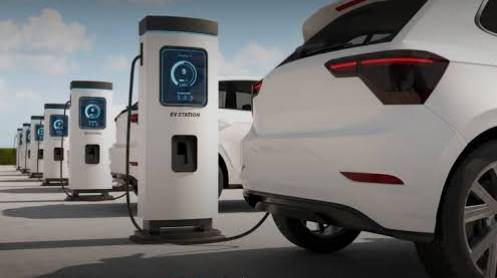
ISLAMABAD: The Pakistan Solar Association (PSA) has urged the federal government to introduce a uniform national electric vehicle (EV) charging pricing framework, including a notified maximum consumer rate, amid reports of significant price variations at charging stations across the country.
Thank you for reading this post, don't forget to subscribe!The association has raised concerns over charging rates reportedly ranging from Rs100 to Rs150 per unit at certain stations, particularly along highways and motorways, despite the government’s concessional electricity tariff for EV charging stations of approximately Rs39.70 per kilowatt-hour (kWh).
In a communication addressed to federal secretaries of relevant ministries, PSA appreciated the government’s efforts to promote electric mobility through concessional electricity pricing and the development of charging infrastructure under the framework administered by the National Energy Efficiency and Conservation Authority (NEECA).
However, the association observed that substantially higher consumer rates at some charging stations raised concerns about whether the benefits of concessional electricity tariffs were being passed on to EV users.
PSA warned that high and unpredictable charging costs could weaken the financial incentives for adopting electric vehicles and undermine the government’s broader electric mobility objectives.
Acknowledging that electricity costs represent only one component of the final charging price, the association noted that operators also need to recover investments in charging equipment, electrical infrastructure, premises, maintenance and other operational expenses while ensuring reasonable returns.
Nevertheless, it stressed that these costs should be addressed through a transparent pricing mechanism to protect consumers from excessive margins and arbitrary charges.
The association has proposed a unified national EV charging pricing framework with a notified maximum consumer rate for comparable charging services. It has also recommended requiring charging station operators to prominently display complete charging rates before initiating a charging session.
Under the proposed mechanism, operators should issue itemised receipts detailing electricity consumed, applicable charging rates, taxes and any separately authorised charges. PSA has further called for a dedicated consumer complaint mechanism and periodic compliance reviews to ensure adherence to the notified framework.
To develop the proposed policy, the association has recommended interministerial consultations involving the Power Division, Ministry of Industries and Production, Ministry of Climate Change and Environmental Coordination, National Electric Power Regulatory Authority (NEPRA), NEECA, relevant power distribution companies and industry representatives.
PSA has also offered to provide technical assistance, utilisation benchmarks and financial modelling to help the government establish a sustainable and transparent pricing mechanism.
The association emphasised that concessional electricity rates and government support for EV charging infrastructure should translate into affordable charging facilities for consumers while allowing investors and operators to earn reasonable returns.
The communication has been forwarded to the relevant federal ministries for consideration and necessary action.