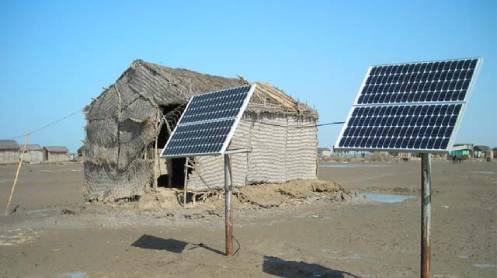
KARACHI: Rural communities in Sindh continue to face limited access to electricity despite living in areas with significant renewable energy potential, highlighting concerns over unequal distribution of benefits from Pakistan’s clean energy transition.
Thank you for reading this post, don't forget to subscribe!The issue was highlighted during a dialogue titled ‘Just Energy Transition in Sindh: Ensuring Community-Centred and Inclusive Clean Energy Development’, held at the Karachi Press Club on Thursday. The event brought together journalists and researchers to examine the social, economic and institutional challenges associated with the expansion of renewable energy in Pakistan, particularly in Sindh.
Organised by policy research organisation The Citizenry, the dialogue focused on equitable electricity access, community participation, land rights, grid connectivity and the distribution of economic benefits from solar and wind energy projects.
During the session, The Citizenry’s Co-founder Oonib Azam presented research findings from Umerkot, highlighting the socio-economic vulnerabilities of communities living in areas identified for renewable energy development.
The research revealed significant gaps in basic services and public participation. According to the findings, 78.9 per cent of surveyed households lacked access to electricity, while all surveyed households relied on water tankers for their water needs.
The study also found that only 3 per cent of respondents were aware of nearby renewable energy developments, while just 5 per cent reported having been consulted about such projects.
Azam also highlighted gaps in existing policy frameworks, including the World Bank’s Environmental and Social Framework, Pakistan’s Power Generation Policy 2015, NEPRA’s Social Investment Guidelines 2021 and Sindh’s Land Grant Policy 2015.
He stressed that a just energy transition must address inequalities in both rural and urban areas, ensuring that the shift towards clean energy does not reproduce existing disparities but creates opportunities for communities to access and benefit from renewable energy development.
Energy production versus electricity access
Journalist Salman Siddiqui, in his presentation titled ‘The National Power Grid: Policy Gaps and Disconnected Communities’, highlighted the disconnect between electricity generation and access to power in energy-producing regions.
He pointed out that communities in renewable energy hubs such as Jhimpir, as well as coal-producing areas of Thar, continued to face inadequate electricity access despite their contribution to the country’s energy production.
Siddiqui emphasised that Sindh’s renewable energy potential could not be fully realised without adequate grid connectivity and power evacuation infrastructure.
Basil Andrews of The Knowledge Forum (TKF) examined the growing adoption of rooftop solar systems and how the trend was creating unequal opportunities for households to benefit from renewable energy.
The discussion underscored the need for a community-centred approach to Pakistan’s energy transition, with greater attention to electricity access, meaningful public consultation, social safeguards and the fair distribution of economic benefits.