
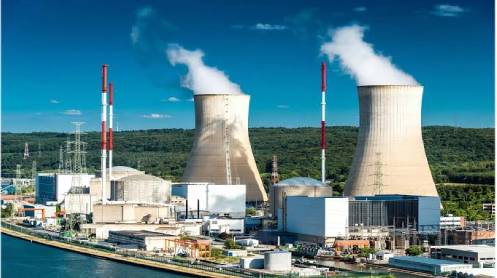
ISLAMABAD: Pakistan’s six nuclear power plants generate more than 3,500 megawatts (MW) of electricity, while the Pakistan Atomic Energy Commission’s (PAEC) 21 cancer hospitals provide diagnosis and treatment services to around 80 per cent of the country’s cancer patients, PAEC Chairman Dr Raja Ali Raza Anwar said.
He was addressing the inaugural session of a five-day regional workshop on Building Sustainable Nuclear Science and Technology Talent Ecosystems through the International Nuclear Science Olympiad (INSO), which commenced in Islamabad on Monday.
Organised by the International Atomic Energy Agency (IAEA) in collaboration with PAEC, the workshop is being held from November 23 to 27 to support preparations for the fourth International Nuclear Science Olympiad, which Pakistan will host in 2027.
Highlighting the peaceful applications of nuclear science and technology, Dr Anwar appreciated the longstanding partnership between Pakistan and the IAEA and welcomed the opportunity to strengthen nuclear science education.
He commended Pakistani students for winning 11 medals in the first three editions of INSO and acknowledged the participation of 23 Pakistani students in international science Olympiads in 2026.
Appreciating the contributions of the Pakistan Institute of Engineering and Applied Sciences (PIEAS), its partner institutions and the Pakistan Nuclear Science Olympiad team, he emphasised the need to establish stronger pathways connecting school-level competitions with university education, research and professional careers. He also reaffirmed PAEC’s full support for hosting INSO 2027.
Trainers from 22 countries are participating in the workshop, while five IAEA experts will deliver lectures and share international best practices on student selection, training and mentorship. Participants will also exchange teaching methodologies and educational resources, including approaches suitable for schools with limited laboratory facilities.
Addressing the inaugural session, Minister of State for Federal Education and Professional Training Wajiha Qamar stressed that investment in young people and nuclear science education must remain a long-term national development priority.
“There is no shortage of talent in Pakistan. Young people comprise more than 60 per cent of Pakistan’s population, and their energy and ambition represent our greatest national strength. Our responsibility is to provide the education, mentorship and opportunities that allow this potential to flourish,” she said.
Appreciating the IAEA’s support for the educational initiative and PAEC’s efforts to bring together experts and educators, she said Pakistan would have the honour of hosting the fourth INSO in 2027, marking the first International Science Olympiad to be organised in the country.
“This is a milestone of national significance,” she added.
Addressing the ceremony online, Chair of the INSO Steering Committee Dr Maya Al Azri praised Pakistan for hosting the upcoming event and emphasised the importance of investing in young scientific talent.
“Investment in young scientific talent is an investment in our collective culture. Let us inspire the next generation of scientists,” she said.
IAEA Section Head Marina Binti Mishar also appreciated Pakistan’s hospitality and expressed confidence in the successful organisation of INSO 2027.
“The hospitality shown by our Pakistani hosts gives us every confidence that INSO 2027 will be both successful and memorable,” she said.
INSO is an important IAEA initiative under its “Atoms for Peace and Development” programme, aimed at inspiring young people to explore nuclear science and its peaceful applications.
The regional workshop also seeks to strengthen international cooperation and establish sustainable educational partnerships that will continue beyond the Olympiad.
Story by Naveed Siddiqui