Trump’s Idea to Disinfect Lungs Leaves Medical Experts Aghast

President Donald Trump returned to the lectern Thursday after a government scientist’s presentation about studies showing that sunlight, humidity and disinfectants kill the coronavirus on surfaces — in some cases within seconds. What Trump suggested next later sparked warnings from doctors and manufacturers of household cleaners. Bill Bryan, an undersecretary at the Homeland Security Department, told reporters during the White House’s daily task force briefing that research had shown bleach could kill the virus in saliva or respiratory fluids in five minutes and isopropyl alcohol could kill it even more…

Read More

Sunlight and humidity kill coronavirus the fastest: US scientists

US scientists say coronavirus dies the fastest when it is exposed to direct sunlight, though a study cited has not yet been made public and awaits external evaluation. William Bryan, science and technology adviser to the Department of Homeland Security, told reporters at the White House on Thursday that government scientists found ultraviolet rays had a potent impact on the pathogen, offering hope its spread may ease over the summer. “The virus dies quickest in the presence of direct sunlight,” “Our most striking observation to date is the powerful effect…

Read More

NTDC wins legal battle against Iranian company

LAHORE: National Transmission and Despatch Company (NTDC), a company falling under the Ministry of Energy (Power Division), has prevailed in an international commercial arbitration initiated by an Iranian company (GAM ARAK Ind. Co.) in 2017 before an arbitral tribunal constituted under the rules of the International Chamber of Commerce (ICC), Paris. According to the NTDC spokesman, “In its detailed award released on 24 April 2020, the arbitral tribunal has dismissed all claims brought by the Iranian company and accepted and granted several counterclaims of NTDC amounting to approximately Rs714 million ($4.5…

Read More

Energy’s Future – Battery and Storage Technologies

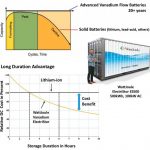
But battery and storage technologies have had a hard time keeping up. And they are critical for any success in a carbon-constrained world that uses intermittent sources like solar and wind, or that worries about resilience in the face of natural disasters and malicious attempts at sabotage. This was pressed home this week by the Department of Energy’s decision to build a multimillion dollar electric grid research complex at the Pacific Northwest National Laboratory. And better, larger batteries are a main component of this research. Jud Virden, PNNL Associate Lab…

Read More

India concludes world’s largest renewables-plus-storage tender at $0.0566595/kWh

Thermal power has had its day in India, the head of a national PV trade body has claimed after the Solar Energy Corporation of India (SECI) concluded what it called the world’s largest renewables-plus-energy-storage capacity tender. The procurement exercise was held to contract 1.2 GW of capacity in the form of assured supply of 600 MW of clean power for six hours daily during peak demand hours – 5.30-9.30am and 5.30pm-12.30am – on a day-ahead, on-demand basis. The successful bids comprised at least 3 GWh of energy storage capacity –…

Read More