ISLAMABAD: Despite strong government claims of prioritising climate resilience and disaster preparedness, the federal budget 2025–26 lacks clarity on how climate- and disaster-related allocations are defined, measured, or linked to Public Sector Development Programme (PSDP) projects.
A key table in the Budget in Brief 2025–26 titled “Gender, Climate and Disaster” outlines broad allocations across gender initiatives, climate mitigation and adaptation, and disaster management. However, the document fails to show how these figures connect to actual PSDP projects—raising serious concerns about transparency and accountability.
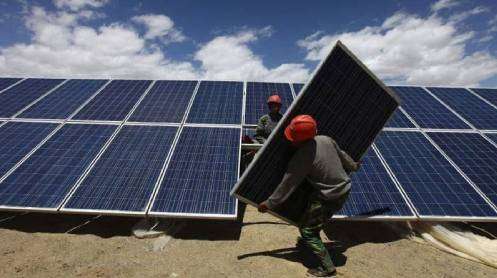
The government lists Rs 587.3 billion in “green subsidies,” including:
- Energy: Rs 529 billion
- Food: Rs 20 billion
- Industries: Rs 9 billion
- Transport: Rs 7.3 billion
- Agriculture: Rs 22 billion
Yet, there is no explanation of the criteria used to define these as “green.” Finance Ministry did not respond to Business Recorder’s request for clarification.
Overall, Rs 978 billion has been tagged under climate and disaster categories. Climate mitigation alone jumps from Rs 212.8 billion in 2024–25 to Rs 603 billion, while adaptation receives Rs 85.4 billion, and supporting efforts are allocated Rs 28.3 billion. But the budget provides no annexure, codes, or cross-references to show which ministries or projects correspond to these numbers.
Without a defined methodology, it remains unclear how the government determined what qualifies as adaptation or mitigation, whether international standards were applied, or how duplication across ministries was avoided. Experts warn this ambiguity heightens the risk of “climate-washing”, where routine infrastructure projects are repackaged as climate investments.
Disaster-related allocations—Rs 33.16 billion for preparedness, Rs 15.87 billion for response, and Rs 1.14 billion for recovery—also appear disconnected from NDMA’s PSDP portfolio and are not reflected in the Climate Change & Environmental Coordination Division.
Similarly, gender-related allocations for education, health, governance, safety, and economic empowerment have no identifiable PSDP linkages or project markers.
The absence of a measurable framework, classification criteria, or traceable project mapping leaves stakeholders questioning the credibility of the government’s climate and disaster spending claims.
Story by Tahir Amin