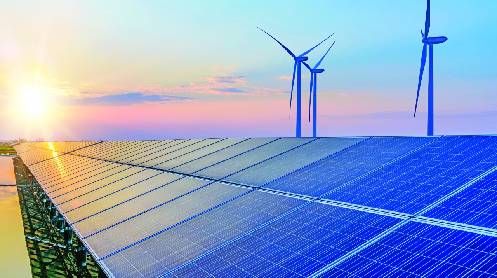
ISLAMABAD: Pakistan’s shift towards clean energy will remain fragile without comprehensive reforms in planning, regulation and grid infrastructure, experts warned at a high-level roundtable, stressing that renewable momentum must be backed by structural changes to build a resilient and sustainable energy system.
The experts highlighted the need for coordinated planning, improved demand forecasting, investment in grid readiness and the mobilisation of targeted climate finance. They cautioned that unresolved issues such as rising capacity payments and outdated tariff structures continue to undermine the country’s energy transition.
These views were expressed at a forum titled “Pakistan’s Energy Transition: Current Standing, Challenges and the Road Ahead”, organised by the Institute of Policy Studies (IPS) in Islamabad. The session brought together policymakers, academics, climate finance specialists, power utilities and renewable energy professionals. Key speakers included former NEECA Managing Director Dr Sardar Mohazzam, CEO Climate Finance Pakistan Mekaeel Malik, Director Environment and Sustainability at PPIB Faisal Sharif, and NUST’s Head of Electrical Engineering Dr Syed Ali Abbas Kazmi. IPS Chairman Khalid Rahman also participated.
Dr Sardar Mohazzam noted that while renewables, including hydropower, now account for a significant share of Pakistan’s energy mix, long-term sustainability remains uncertain. He stressed the need for forward-looking planning encompassing hydrogen fuels, new energy vehicles and, most critically, addressing the mounting burden of capacity payments that continue to distort the power sector.
On climate finance, Mekaeel Malik said 69 per cent of Pakistan’s climate funding comes from international public sources, while 31 per cent is private. He added that more than 70 per cent of these funds are directed towards mitigation—primarily renewable energy—while adaptation remains significantly underfunded.
Faisal Sharif emphasised that the central challenge of energy transition is achieving it in a manner that is economically viable, socially equitable and environmentally sustainable. In the same context, Mustafa Anwar pointed to growing interest in hydrogen fuel but cautioned that high costs will limit its near-term adoption despite pilot projects.
Highlighting solar trends, Hasnat Khan, Vice Chairman of the Pakistan Solar Association, said Pakistan has imported around 46GW of solar equipment, with nearly 35GW installed, mostly behind-the-meter. Only 7–9 per cent falls under net metering, he said, adding that the government missed an opportunity by not deploying utility-scale solar earlier and is now repeating the mistake by delaying battery adoption.
Dr Nadia Shahzad of NUST urged distribution companies to leverage the emerging battery market and stressed the importance of domestic manufacturing, particularly of laminations, to reduce import dependence.
From the utility perspective, LESCO’s Arqam Ilyas warned that rapid solar adoption and emerging electric vehicle trends are putting pressure on a grid designed for one-way power flows. He cautioned that delays in policy action could push consumers towards batteries and complete grid defection.
Muhammad Yousif criticised Nepra’s tariff framework, calling it outdated and a key factor behind rising electricity prices. Tanvir Ahmed of UNHCR highlighted that high tariffs, poor service quality and load shedding are pushing low-income households towards solar not by choice, but necessity.
Addressing planning shortcomings, Dr Faisal Nadeem pointed out that flawed forecasting has long hindered Pakistan’s ability to accurately assess renewable capacity needs and optimal deployment locations.
Concluding the session, IPS Chairman Khalid Rahman acknowledged the scale of the challenges but stressed that a focus on emerging opportunities could steer Pakistan towards a more sustainable, equitable and resilient energy future.