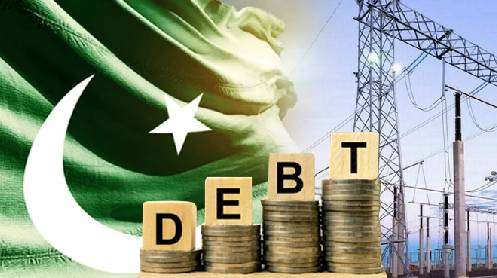
ISLAMABAD: Pakistan’s power sector circular debt is projected to approach Rs1.9 trillion, rising from Rs1.689 trillion recorded during the first half (July–December) of FY2025-26, according to sources in the Power Planning and Monitoring Company.
As of February 28, 2026, the circular debt stock stood at Rs1.889 trillion, reflecting a sharp increase of nearly Rs200 billion in just two months. The surge comes amid mounting economic pressure linked to Middle East tensions and renewed concerns from the International Monetary Fund, which has termed the issue a serious risk to Pakistan’s economic stability.
Liabilities related to power projects under the China-Pakistan Economic Corridor (CPEC) have reached a record Rs543 billion, highlighting the growing financial burden of capacity payments to independent power producers (IPPs). The issue is expected to feature prominently during the upcoming visit of Ishaq Dar to Beijing.
Officials attribute the recent spike in circular debt to weaker recoveries and higher system losses compared to targets set by the National Electric Power Regulatory Authority (Nepra).
The Power Division had earlier committed to reducing circular debt to Rs1.614 trillion by the end of the current fiscal year. Longer-term projections have also been revised, with the June 2027 target adjusted upward to Rs1.346 trillion from the earlier estimate of Rs1.2 trillion.
To contain the situation, the government has approved a Rs200 billion Technical Supplementary Grant (TSG), structured as equity investment in power distribution companies (Discos) to ease liquidity pressures.
Over the past six years, the government has addressed circular debt of approximately Rs2.4 trillion, including refinancing Rs1.275 trillion at lower interest rates. This refinancing is being serviced through a Debt Service Surcharge (DSS) of Rs3.23 per unit imposed on electricity consumers.
Recovery performance of Discos is expected to improve from 90% as of June 2024 to 97.34% by June 2027, exceeding the earlier target of 95%.
However, inefficiencies persist. K-Electric has reportedly failed to clear Rs145 billion in outstanding dues, contributing significantly to the Rs150 billion increase in circular debt flow. Its total liabilities have now reached Rs351 billion.
Despite these challenges, some positive trends have emerged. Under-recoveries and inefficiencies of Discos improved by Rs45 billion compared to the same period last year, while payments toward circular debt rose significantly to Rs224 billion, up from Rs24 billion a year earlier.
Officials noted that while pressures remain, the circular debt flow is still within permissible limits, and indicators suggest the stock may stabilise by the end of the fiscal year.
The IMF has reiterated Pakistan’s commitment to achieving energy sector viability and avoiding the recurrence of circular debt, stressing the need for sustained structural reforms.
The issue is also expected to be discussed at a public hearing of National Electric Power Regulatory Authority on Tuesday, during deliberations on the Fuel Charges Adjustment (FCA) for February 2026.
Story by Mushtaq Ghumman