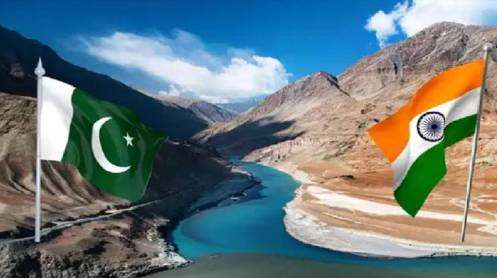
NEW DELHI: India has intensified its stance in the ongoing dispute over the Indus Waters Treaty (IWT), with Water Resources Minister C.R. Patil declaring that New Delhi is working to ensure that “not a single drop of water” reaches Pakistan in the coming years.
Speaking to Indian news agency ANI, Patil said the government is actively pursuing measures under directives from Prime Minister Narendra Modi following India’s decision to place its participation in the Indus Waters Treaty in abeyance after the April 2025 Pahalgam attack. India accused Pakistan of supporting the attack, an allegation Islamabad has consistently denied.
“The government is actively working on a strategy to ensure that not a single drop of water flows to Pakistan,” Patil said, signaling a tougher approach toward managing water resources shared between the two countries.
The Indus Waters Treaty, signed in 1960, regulates the distribution and use of water from six rivers of the Indus Basin system. The rivers originate in India and flow into Pakistan, providing a critical source of water for agriculture, industry, and domestic consumption for millions of people across the region.
Tensions between the nuclear-armed neighbors escalated sharply following the Pahalgam incident, culminating in a four-day military confrontation involving drone, missile, and artillery exchanges that reportedly resulted in nearly 70 fatalities on both sides.
Water has since emerged as a major point of contention. While Indian officials have expressed their intention to maximize control over river flows, water experts note that India currently lacks the infrastructure required to completely block or divert significant volumes of water destined for Pakistan. Existing dams can primarily regulate the timing of water releases rather than permanently stop flows.
Officials in Indian-administered Kashmir have indicated that major infrastructure projects aimed at altering water management patterns are unlikely to begin before mid-2027 and could take at least five years to become operational.
Pakistan has strongly opposed India’s unilateral suspension of the treaty, maintaining that the agreement remains legally binding and contains no provision allowing either party to withdraw unilaterally. Islamabad has repeatedly warned that any attempt to alter the natural flow of transboundary rivers would be viewed as an “act of war.”
Pakistan has also called on the United Nations Security Council to address the dispute, arguing that India’s actions could have serious implications for regional peace, food security, economic stability, and humanitarian conditions across South Asia.
The future of the Indus Waters Treaty remains uncertain as diplomatic tensions persist, raising concerns about the long-term management of one of the world’s most critical shared water systems.
By AFP