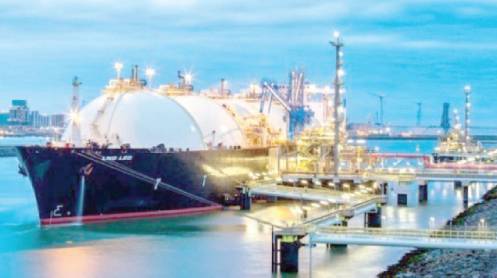
ISLAMABAD: A sharp 29.7 percent decline in liquefied natural gas (LNG) import volumes has led prospective investors to delay final investment decisions (FIDs) on new LNG terminals, according to the Economic Survey 2025–26.
The survey highlighted that weak demand for gas-based power generation, rising adoption of alternative energy sources such as solar, and improved energy management have contributed to reduced LNG imports. Despite the decline, LNG still accounted for 15.2 percent of Pakistan’s total imports during July–March FY2026.
It noted that the Oil and Gas Regulatory Authority (OGRA) has issued construction licenses to two private sector companies—Energas Terminal Private Limited and Tabeer Energy Private Limited—but both have yet to proceed with final investment decisions. Similarly, LNG Easy (Private) Limited has been granted a construction license but has not reached FID, reflecting investor caution in the current demand environment.
The report said that once completed, proposed LNG terminals could add around 1.52 billion cubic feet per day (BCFD) of re-gasification capacity, aimed at narrowing the country’s natural gas supply-demand gap.
On the upstream side, domestic gas production declined by 3.7 percent due to limited new discoveries, tightening overall supply conditions. Average gas consumption stood at 2,929 MMCFD, including 613 MMCFD of re-gasified LNG (RLNG). During the period, gas utilities expanded infrastructure by laying 729 km of mains and 403 km of service lines, connecting nearly 95 villages and towns.
Meanwhile, 149,908 new RLNG-based connections were added across domestic, commercial, and industrial categories. The government expects to connect over 700,000 additional consumers in FY2027, supported by planned investments exceeding Rs 102.7 billion in transmission and distribution projects.
On the oil side, domestic production declined by 0.6 percent, while petroleum imports fell by 5.9 percent to $11.2 billion, though they still represented 22.2 percent of the total import bill. Petroleum product consumption rose 3.5 percent year-on-year to 13.64 million tonnes.
The survey also underscored the strategic importance of the Strait of Hormuz, through which a significant share of global oil and LNG trade passes, highlighting ongoing vulnerabilities in global energy supply chains.
Story by Wasim Iqbal