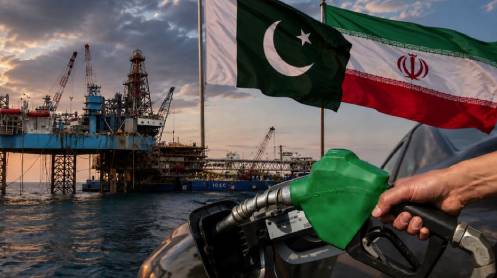
KARACHI: Pakistan may once again explore importing crude oil from Iran following the temporary easing of U.S. sanctions on Tehran, creating an opportunity to secure discounted crude supplies and reduce the country’s petroleum import bill.
Energy experts, however, caution that while Pakistani refineries are technically capable of processing Iranian crude, commercial viability remains a challenge due to the high furnace oil (FO) yield associated with Iranian grades and the limited domestic demand for furnace oil.
Pakistan Refinery Limited (PRL) previously imported Iranian crude under a long-term agreement with the National Iranian Oil Company (NIOC). The imports ceased after U.S. sanctions were imposed, and Pakistan has not imported Iranian crude since.
A former head of a leading Karachi-based refinery said the evolving geopolitical situation and temporary sanctions relief have reopened the possibility of Iranian oil imports, although the outlook remains uncertain over the next two months.
He explained that Pakistani refineries can process Iranian light crude, but its relatively high furnace oil content makes it commercially unattractive under current market conditions.
“The key factor will be pricing,” he said. “If Iranian crude is offered at a meaningful discount compared to international benchmark prices and Arab crude, it could become economically viable. Without a price advantage, refining Iranian crude would not be profitable.”
Refinery Upgrades Key to Processing Heavy Crude
Industry experts note that Indian refineries have a competitive advantage because they are equipped with advanced deep-conversion technologies, including hydrocrackers, delayed cokers and residue fluid catalytic cracking units. These technologies enable them to process heavier crude grades efficiently while maximizing the production of high-value products such as diesel and gasoline.
In contrast, most Pakistani refineries lack such conversion units. Over the past 16 years, local refineries have gradually shifted from processing heavy sour crude to lighter and sweeter crude grades to improve refining economics and operational sustainability.
Currently, domestic refineries meet around 80 percent of Pakistan’s diesel demand following process modifications and changes in crude sourcing. However, diesel demand has weakened due to ample inventories, with refineries continuing to operate at high throughput.
Pakistan’s diesel sales fell to 455,000 tonnes in May, representing a 32 percent year-on-year and 17 percent month-on-month decline.
During FY2025, domestic diesel production reached 4.958 million tonnes, while production during July-February FY2026 stood at 3.787 million tonnes. Diesel imports totaled 2.037 million tonnes in FY2025 and 1.239 million tonnes during July-April FY2026.
Among local refiners, only Pak Arab Refinery Limited (PARCO) has a mild cracking unit, while other refineries still require major upgrades to process heavier crude efficiently.
PRL Expansion to Enhance Refining Capability
Pakistan Refinery Limited is pursuing its Refinery Expansion and Upgrade Project (REUP), which aims to double its crude processing capacity from 50,000 barrels per day to 100,000 barrels per day.
The project will significantly reduce the production of high-sulphur furnace oil while enabling the refinery to produce cleaner Euro V-compliant petroleum products. PRL is also engaging with the government on policy reforms, including restoration of the taxable status of petroleum products and amendments to the Brownfield Refinery Policy, which are considered essential for the project’s successful implementation.
Potential Savings on Oil Import Bill
According to Sania Irfan, an analyst at Topline Securities, Pakistan could benefit substantially from importing discounted Iranian crude.
The country imported nearly US$17 billion worth of petroleum products and fuels in 2025. Historically, Iranian crude was supplied to Pakistan at prices below comparable Saudi and UAE grades, and current market data continues to show Iranian light and heavy crude trading at a discount.
She estimates that importing 10 to 20 percent of Pakistan’s crude oil requirements from Iran at discounted prices could generate annual savings of approximately US$170 million to US$340 million, including reduced freight costs.
While the temporary easing of sanctions has reopened discussions on Iranian crude imports, industry observers believe the commercial feasibility will ultimately depend on geopolitical developments, pricing mechanisms, refinery upgrades and future government policy.
Story by Aamir Shafaat Khan