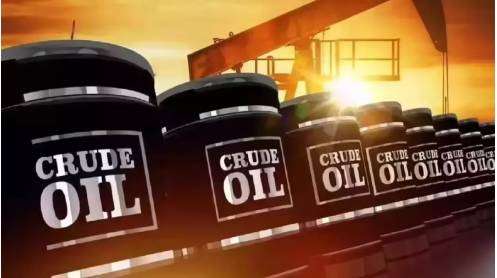
Pakistan could save between $170 million and $340 million annually on crude oil imports if international sanctions on Iran are lifted, according to a new research report by Topline Securities Ltd., which highlights the significant economic opportunities that could emerge from restoring formal trade between the two neighboring countries.
In its report, “Pakistan Strategy – What If Iran Sanctions Are Lifted? Implications for Pakistan from a Historical Perspective,” Topline Securities said that renewed trade with Iran would not only reduce Pakistan’s energy import bill but also strengthen bilateral commerce, industrial cooperation, and export opportunities.
The report noted that before sanctions on Iran were intensified in 2012, bilateral trade between Pakistan and Iran exceeded $1.2 billion in FY2010. During that period, Pakistan faced a trade deficit that peaked at $813 million, primarily due to substantial imports of Iranian crude oil and other energy products.
However, as international sanctions tightened, Pakistan’s imports from Iran declined sharply, resulting in a reversal of the trade balance. Pakistan recorded a trade surplus of $73 million with Iran in FY2013, after which formal bilateral trade virtually came to a halt.
Between FY2009 and FY2013, Pakistan exported rice, maize, fruits, vegetables, textiles, pharmaceuticals, surgical instruments, and sports goods to Iran, while importing crude oil, coal, hot-rolled steel (HRC), iron and steel scrap, and other industrial raw materials.
The report emphasized that both Pakistan and Iran have already expressed their intention to expand bilateral trade to $10 billion through enhanced economic cooperation and the establishment of Special Economic Zones (SEZs) along the shared border.
Topline Securities suggested that Pakistan could maximize these opportunities by negotiating a Preferential Trade Agreement (PTA) or a Free Trade Agreement (FTA) with Iran once international sanctions are lifted.
Pakistan imported nearly $17 billion worth of petroleum products and fuels in 2025. Historically, Iranian crude oil was priced 13–17 percent lower than comparable imports from Saudi Arabia and the United Arab Emirates between FY2009 and FY2012. Even today, Iranian Light and Iranian Heavy crude grades trade at discounts of around 2–3 percent compared to Saudi crude.
Assuming Iran offers attractive pricing to regain international market share after sanctions are removed, the report estimates Pakistan could save $170 million to $340 million annually by sourcing 10–20 percent of its petroleum requirements from Iran at an average 10 percent discount, while also benefiting from reduced transportation costs.
The report also highlighted potential savings in industrial imports. Pakistan imported around $4 billion worth of iron and steel products in 2025. Historically, Iranian hot-rolled coil (HRC) was approximately 16 percent cheaper than comparable imports from China and South Africa.
Based on Pakistan’s HRC import bill of $1.3 billion in 2025, sourcing 10–20 percent of these imports from Iran could generate additional annual savings of $21 million to $42 million, provided similar price advantages continue.
Beyond energy and industrial products, the report pointed to new export opportunities for Pakistan. Iran has recently expressed interest in importing up to 60 percent of its meat requirements from Pakistan, opening another avenue for boosting bilateral trade once commercial ties normalize.
Meanwhile, Minister for National Food Security and Research Rana Tanveer Hussain recently stated that Pakistan would review the possibility of importing Iranian oil if U.S. sanctions on Tehran are lifted. He added that easing regional tensions and restoring trade relations with Iran could have a positive impact on Pakistan’s economy by lowering import costs and expanding cross-border commerce.