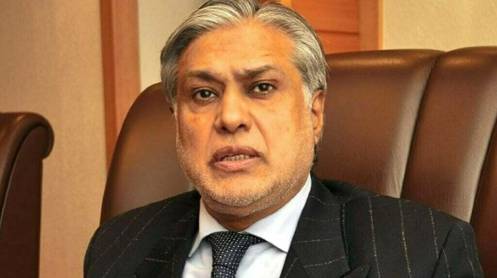
ISLAMABAD: Deputy Prime Minister and Foreign Minister Ishaq Dar has warned that any attempt by India to undermine the Indus Waters Treaty (IWT) would carry a “high cost,” reaffirming Pakistan’s commitment to protecting its water rights under international law.
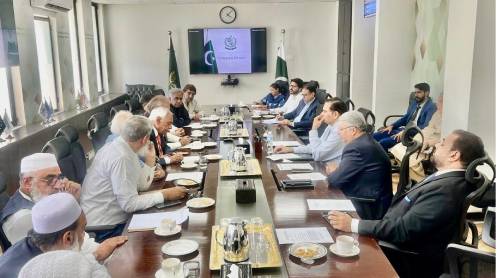
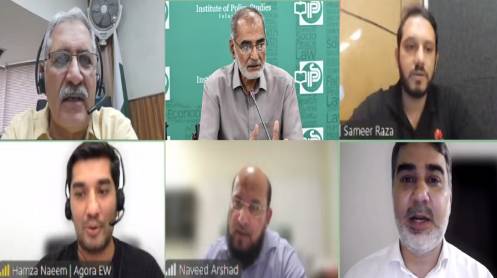
Speaking at a conference on the Indus Waters Treaty, Dar strongly criticized what he described as India’s illegal attempts to alter the status of the landmark water-sharing agreement, particularly at a time when climate change is intensifying water insecurity across the region.
Addressing the event, Pakistan Peoples Party (PPP) Chairman Bilawal Bhutto Zardari said that if the world could not imagine peace with the Strait of Hormuz blocked, it should equally recognize that peace and stability in South Asia were impossible while the Indus Waters Treaty remained in abeyance.
He accused India of “weaponising water” by targeting Pakistan’s lifeline and urged the international community to support Pakistan in challenging what he termed India’s unlawful actions under the treaty. Bilawal further called for an international convention to prevent the weaponisation of global commons, including shared water resources, warning that continued violations could trigger regional escalation and strategic instability.
Federal Minister for Climate Change and Environmental Coordination Dr. Musadik Masood Malik said India’s actions had compounded Pakistan’s climate-related challenges.
“This is not merely a climate crisis or a water crisis—it is a crisis of justice,” he remarked, arguing that the violation of one of the world’s most enduring international treaties undermines the foundations of the global legal order and threatens the rights of lower riparian states worldwide.
Former Minister of State for Foreign Affairs Hina Rabbani Khar noted that the Indus Waters Treaty already provides a clearly defined legal mechanism for any amendments, adding that India’s unilateral actions reflected the growing uncertainty within the international rules-based order.
Pakistan’s Commissioner for Indus Waters Syed Mehr Ali Shah said India’s actions violate the treaty’s dispute resolution mechanism under Article IX and expressed concern over New Delhi’s suspension of hydrological data sharing.
He revealed that Pakistan had sent a formal letter to India a day earlier requesting the restoration of data exchange in accordance with treaty obligations.
International experts participating in the conference also expressed concern over the treaty’s suspension.
Dr. Roxolana Zigon, Head of the Scientific Centre for International & Strategic Studies at the University of World Civilisations in Moscow, described the Indus Waters Treaty as one of the world’s most durable international agreements and praised Pakistan’s restrained and responsible response despite provocative statements from senior Indian officials.
Laurie Watkins, a US-based global policy expert and author, argued that India’s decision to withhold river flow data and ignore Pakistan’s official communications regarding inconsistent water flows violated principles of customary international law, regardless of its position on the treaty’s status.
Meanwhile, Professor Victor Gao, Vice President of the Centre for China and Globalisation in Beijing, described India’s suspension of the treaty as “a crime against humanity.” He observed that while India is an upper riparian state to Pakistan, it is also a lower riparian state to China, suggesting that Beijing has the capacity to discourage any attempts to use water as a geopolitical tool.
Former Federal Minister for Defence Khurram Dastagir Khan outlined what he described as a series of unilateral actions taken by India after placing the treaty in abeyance, including the closure of gates at the Baglihar and Salal dams and the accelerated development of water infrastructure on rivers governed by the treaty.
Former President of the National Defence University, Lt Gen (Retd) Amir Riaz, emphasized that the Indus River system sustains the world’s largest contiguous irrigation network and remains critical to Pakistan’s agriculture, economy, and energy security.
“The life, development and prosperity of Pakistan are intrinsically linked to this river system,” he said, warning that any attempt to deprive Pakistan of its rightful share of water constitutes a serious threat to national security.
Former caretaker Federal Minister for Law and Justice Ahmer Bilal Soofi and Institute of Regional Studies (IRS) President Jauhar Saleem also addressed the conference, stressing the importance of upholding international law and preserving the integrity of the Indus Waters Treaty.
Story by Rasheed Khalid