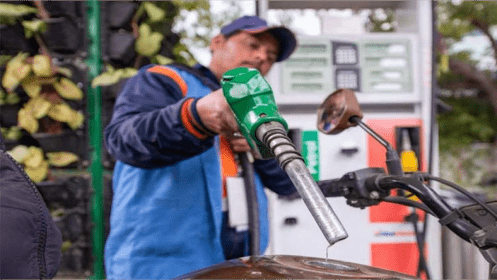
ISLAMABAD: The federal government on Friday reduced the prices of petrol and high-speed diesel (HSD) by Rs1.97 per litre each, effective immediately for the week ending July 10, passing on part of the benefit of lower international oil prices to consumers.
According to the official notification, the ex-depot price of petrol has been reduced from Rs299.50 to Rs297.53 per litre, while the ex-depot price of high-speed diesel (HSD) has been lowered from Rs311.47 to Rs309.50 per litre.
The reduction comes despite an increase in the petroleum levy on both products. Industry estimates suggest that without the higher levy, petrol prices could have declined by around Rs11 per litre, while diesel prices could have fallen by nearly Rs4 per litre.
Under commitments made with the International Monetary Fund (IMF), the government doubled the Climate Support Levy from Rs2.50 to Rs5 per litre effective July 1, while making corresponding adjustments to the petroleum levy. The petroleum levy now stands at around Rs70 per litre on petrol and Rs80 per litre on HSD, in addition to the climate levy.
The government also continues to collect substantial duties and taxes on petroleum products. Consumers currently pay approximately Rs95 per litre in taxes on petrol, including customs duty, petroleum levy, and climate levy, while the total government charges on HSD amount to around Rs101 per litre, including customs duty, petroleum levy, climate levy, and the inland freight equalisation margin.
Since reaching record highs earlier this year, fuel prices have witnessed a significant downward trend. Petrol, which had peaked at Rs458.41 per litre on April 3 after rising sharply during the regional conflict, has now declined by nearly Rs161 per litre. Similarly, HSD has fallen from its peak of Rs520.35 per litre to Rs309.50 per litre, providing some relief to the transport, agriculture, and industrial sectors.
Petrol and HSD remain the country’s highest-selling petroleum products, with combined monthly consumption ranging between 700,000 and 800,000 tonnes, making them key contributors to government revenue through taxes and levies.