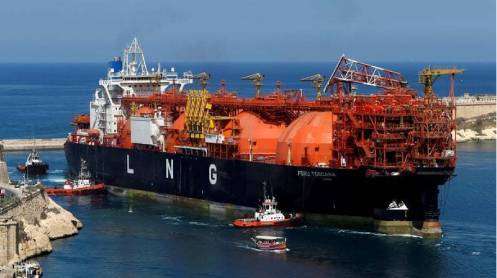
ISLAMABAD: Pakistan has been forced to purchase one of its most expensive liquefied natural gas (LNG) cargoes in years as prolonged disruptions in the Middle East continue to tighten global supplies, placing additional pressure on the country’s finances and accelerating efforts to reduce dependence on imported LNG.
According to a Bloomberg report, state-owned Pakistan LNG Limited (PLL) purchased a cargo for late July delivery at around $21.88 per million British thermal units (mmBtu) on Monday, the highest spot price paid by the country since 2022.
Neighbouring Bangladesh has also been hit by the supply crunch, with its state-owned LNG buyer securing at least one August cargo at similarly elevated prices last week.
The sharp rise in LNG prices follows the prolonged disruption of shipping through the Strait of Hormuz, a vital transit route for nearly 20 percent of global LNG trade, amid escalating tensions in the Middle East.
Pakistan and Bangladesh have already been grappling with electricity shortages after Qatar, their largest LNG supplier, suspended scheduled deliveries following the closure of its export facilities in March after an Iranian attack.
The emergency spot purchases are costing both countries roughly twice as much as LNG supplied under long-term contracts with Qatar. The Gulf producer has also delayed plans to restore export capacity following renewed instability around the Strait of Hormuz.
While the expensive spot cargoes are expected to help prevent more severe power shortages in the short term, the higher import costs are increasing pressure on government finances and may eventually lead to higher electricity and gas tariffs for consumers.
The supply crisis is also prompting both countries to accelerate efforts to diversify their energy mix and reduce reliance on imported LNG.
Bangladesh has stepped up investment in renewable energy, introducing a package of incentives last month that includes tax exemptions for the solar sector through 2035. Imports of solar panels and photovoltaic cells from China increased by 40 percent during the first half of 2026 compared with the same period last year.
Dhaka has also set a target of installing 10 gigawatts (GW) of solar power capacity by 2030, up from approximately 1.7 GW installed by 2024.
Pakistan, meanwhile, is increasingly relying on nuclear power, coal, and renewable energy to offset reduced LNG availability.
According to energy market data compiled by Optimus, Pakistan’s nuclear power generation increased by 30 percent year-on-year in June, while coal-fired electricity generation rose by 5 percent, reflecting the country’s efforts to diversify its power generation mix amid ongoing LNG supply disruptions.