Despite investing billions of dollars in power generation over the past two decades, Pakistan continues to face a stark energy paradox: millions of citizens still lack access to reliable electricity. While the country has significantly expanded its installed generation capacity through thermal, hydropower, nuclear, coal, wind and solar projects, access to affordable and dependable electricity remains uneven—particularly in remote and underserved regions.
According to the Energy Progress Report 2026, more than 10.8 million Pakistanis were still living without electricity in 2024, placing Pakistan among the world’s 20 largest electricity access gaps. The report highlights that electricity is more than a basic utility; it is the backbone of education, healthcare, communication, economic opportunity and sustainable development.
The question is no longer whether Pakistan can generate enough electricity. Rather, it is whether the country can ensure that every citizen benefits from its growing energy capacity.
Pakistan today has an installed electricity generation capacity of approximately 46,000 megawatts (MW), sourced from hydropower, natural gas, coal, nuclear energy, wind and solar. During favorable weather conditions, grid-connected wind farms produce around 1,800 MW, while utility-scale solar projects contribute more than 1,500 MW, excluding the rapidly expanding rooftop solar systems transforming energy consumption across urban and rural communities.
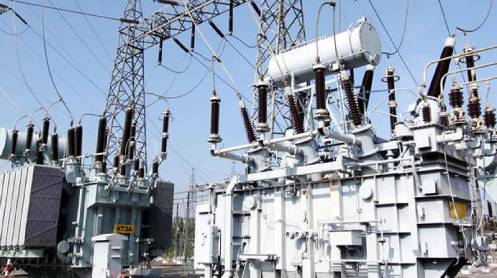
The challenge has shifted from electricity generation to transmission, distribution, affordability and equitable access.
Pakistan possesses one of South Asia’s most diverse energy portfolios. Indigenous natural gas reserves, vast Thar coal deposits, enormous hydropower potential, abundant solar resources across Balochistan, Sindh and southern Punjab, and world-class wind corridors along the Sindh coastline collectively provide a solid foundation for long-term energy security.
Among these resources, Thar coal has emerged as one of Pakistan’s most strategic indigenous assets. Large-scale mining and power generation projects have reduced dependence on imported fuels while strengthening national energy security. These developments demonstrate how responsible utilization of domestic resources can support industrial growth, create employment and enhance electricity generation.
At the same time, Pakistan is rapidly becoming one of South Asia’s fastest-growing solar markets. Falling photovoltaic prices, increasing consumer awareness and supportive government policies have accelerated rooftop solar adoption across residential, commercial and industrial sectors. However, the next phase of the country’s energy transition must prioritize expanding electricity access, not merely increasing installed capacity.
The 18th Constitutional Amendment has also reshaped Pakistan’s energy governance by empowering provincial governments to play a more active role in planning, regulating and developing their own energy sectors. Provinces are increasingly establishing power generation companies, transmission and distribution utilities, regulatory authorities and energy development institutions to harness local resources more effectively.
This decentralized approach presents a significant opportunity to accelerate electrification, particularly in remote districts that have historically remained beyond the reach of the national grid.
Provincial governments have already demonstrated leadership through ambitious renewable energy initiatives, including the distribution of solar home systems, solarization of schools, healthcare facilities and public buildings, and clean energy programs for low-income households. These efforts have begun improving electricity access while reducing energy costs and should now be expanded nationwide.
One of Pakistan’s greatest untapped opportunities lies in developing large-scale solar parks across provinces blessed with abundant sunshine. Supported by battery energy storage systems and modern transmission infrastructure, these solar parks can provide affordable electricity to nearby communities, industries and agricultural areas while reducing reliance on imported fossil fuels.
Equally critical is the electrification of Pakistan’s off-grid population.
Extending conventional transmission lines to every remote village is often economically impractical. Fortunately, advances in technology have made solar mini-grids, smart micro-grids, hybrid renewable energy systems and battery storage increasingly affordable and reliable. These decentralized solutions can deliver electricity to isolated communities far more efficiently than waiting for costly grid expansion.
Reliable electricity transforms lives. It enables schools to provide better education, healthcare facilities to store medicines and vaccines safely, farmers to adopt modern irrigation systems, entrepreneurs to establish businesses and rural communities to participate more fully in the national economy.
The private sector will be indispensable in this transformation. Strong partnerships between provincial governments, renewable energy developers, independent power producers, financial institutions and technology providers can accelerate investment in distributed energy systems while introducing innovative financing models that make clean energy accessible to lower-income households.
Pakistan’s energy strategy must now focus on three interconnected priorities: energy security, affordability and universal access.
The country’s substantial generation capacity must translate into electricity for every household through smarter planning, stronger provincial institutions, modern transmission networks and accelerated deployment of renewable energy technologies. Investments in indigenous resources—including Thar coal, hydropower, wind and solar—must be complemented by intelligent distribution systems capable of reaching even the most remote communities.
No child should be forced to study by candlelight. No rural health center should operate without electricity to power life-saving equipment. No farming community should be denied economic opportunity simply because reliable electricity remains out of reach.
Pakistan has already demonstrated that it possesses the natural resources, technical expertise and institutional capability to generate sufficient electricity. The next national priority must be ensuring that every Pakistani—regardless of geography or income—has access to reliable, affordable and sustainable energy.
With stronger provincial leadership, expanded public-private partnerships, accelerated village electrification, smart-grid technologies and greater utilization of indigenous and renewable resources, Pakistan can bridge its electricity access gap and build an energy future that is not only sustainable, but inclusive and prosperous for generations to come.