KARACHI (July 28): Sindh Chief Minister Syed Murad Ali Shah on Tuesday pledged swift resolution of regulatory and operational issues facing British investors and multinational corporations, assuring the international business community that Sindh would continue pursuing investor-friendly reforms, regulatory simplification and policy consistency to attract fresh investment and facilitate business expansion.
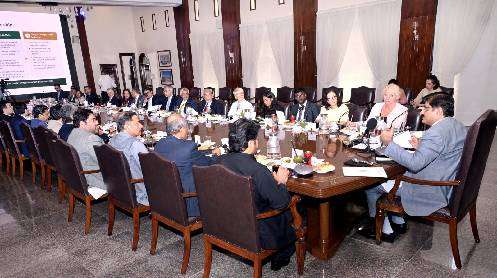
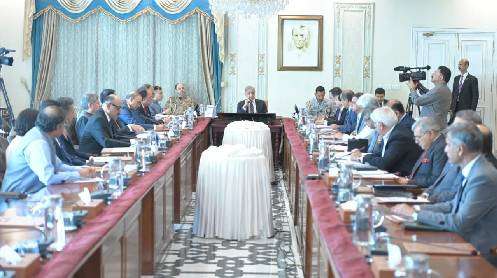
Chairing a high-level Pakistan-UK Roundtable of Multinational Corporations and UK-based firms operating in Sindh, organised in collaboration with the British Deputy High Commission, the Chief Minister reaffirmed his government’s commitment to creating a transparent, predictable and globally competitive business environment. He said the provincial administration was determined to remove barriers to investment, strengthen public-private engagement and position Sindh as the preferred destination for international investors.
The roundtable brought together representatives of leading British companies, multinational corporations, the Overseas Investors Chamber of Commerce and Industry (OICCI), senior officials of the British High Commission and key provincial ministers and secretaries to discuss investment climate challenges, regulatory reforms and measures to improve ease of doing business.
The meeting was attended by British Deputy High Commissioner Alison Blackburne, Director Trade Vanessa Montgomery, Counsellor and Group Head Economics and Trade Elena Mylona, Economist Meran Annalingam, Private Sector Development Adviser Maryam Riaz, Political Adviser Huda Ikram, Trade Adviser Sarah Peng, Deputy Trade Director Zainab Mahmood, along with representatives of Oxford University Press, Haleon, British International Investment, GSK, Reckitt, Unilever, Standard Chartered Bank, UBL, AstraZeneca, OICCI and other leading firms.
Among the Sindh government participants were Local Government Minister Nasir Hussain Shah, Labour Minister Saeed Ghani, Food Minister Makhdoom Mehboob Zaman, Special Assistant to the Chief Minister for Investment and Public-Private Partnerships Syed Qasim Naveed, Chairman Sindh Revenue Board, Chairman Planning & Development Board, Additional Chief Secretary Home and senior officials from the Finance, Industries, Labour, Transport, Social Protection and Investment departments.
Addressing the gathering, Chief Minister Murad Ali Shah said the objective of the roundtable was not merely to hear investors’ concerns but to resolve them through practical and time-bound measures.
“Today’s session was designed with a specific purpose: to listen. We have heard your concerns directly, and I want to assure you that these are not just notes on a page. I have directed my team to treat these grievances as urgent matters requiring immediate and concrete action,” he said.
The Chief Minister acknowledged challenges relating to regulatory procedures, taxation, infrastructure, utilities and inter-agency coordination, stressing that the government would work closely with businesses to remove impediments affecting investment and growth.
“A government’s primary duty to its investors is to provide stability, transparency and consistency. We are not only focused on attracting new investment; we are equally committed to ensuring that our existing investors thrive and expand their operations in Sindh,” he said.
Murad Shah highlighted the province’s ongoing efforts to simplify administrative procedures, digitise public services and improve institutional coordination.
“Our goal is to create an ecosystem that is predictable, efficient and globally competitive. We want investors to view us as partners, not merely regulators,” he remarked.
The Chief Minister said British companies had made significant contributions to Sindh’s economy through investment, employment generation, technology transfer and corporate best practices.
“Sindh is open for business. We value the trust British companies have placed in our province and remain committed to strengthening this partnership through mutual respect, cooperation and shared prosperity,” he added.
Earlier, Special Assistant to the Chief Minister for Investment and Public-Private Partnerships Syed Qasim Naveed welcomed the participants and described the roundtable as a results-oriented platform aimed at addressing investors’ concerns and strengthening the province’s investment climate.
He said the government wanted discussions to translate into tangible outcomes and institutional improvements.
“We do not want this engagement to be merely ceremonial. Our objective is to ensure that it leads to clear actions, defined responsibilities and measurable progress,” he said.
Qasim Naveed announced that the government intended to develop an issue-wise action matrix assigning concerns to relevant departments, along with designated focal persons and timelines for implementation.
“Our aim is not only to resolve individual cases but also to identify recurring bottlenecks and address them through institutional and policy improvements,” he added.
British Deputy High Commissioner Alison Blackburne welcomed the initiative and described the Chief Minister’s participation as a strong signal of Sindh’s commitment to supporting investors and improving the business environment.
She noted that the delegation included officials from both the British High Commission teams in Karachi and Islamabad, reflecting the importance the United Kingdom attaches to its economic partnership with Sindh and Pakistan.
Ms Blackburne said the Chief Minister’s presence demonstrated the provincial government’s willingness to engage directly with investors and resolve issues affecting companies operating in Karachi and across Sindh.
Highlighting the significant contribution of British businesses to the provincial economy, she acknowledged the Sindh government’s efforts to improve the regulatory and investment landscape.
She noted that more than 500 reform measures introduced in recent years to reduce regulatory bottlenecks and facilitate businesses were encouraging developments that would strengthen investor confidence and attract additional investment.
Emphasising the importance of sustained engagement between the public and private sectors, she said continued dialogue was essential for creating a more predictable, transparent and competitive business environment.
A presentation by REMIT/FCDO on Pakistan’s investment climate and regulatory reform agenda highlighted both the country’s economic potential and the challenges affecting investor confidence.
The presentation revealed that while 74.1 per cent of investors would recommend Pakistan as a destination for new foreign direct investment (FDI), 95.1 per cent continued to perceive business risks as medium to high, reflecting a key paradox in the country’s investment landscape.
Pakistan’s competitiveness score stood at 49.3 out of 100, compared with Bangladesh (63), Vietnam (71), Indonesia (78), the UAE (81), Malaysia (83), India (92) and China (100).
According to the findings, only 25 of 48 multinational parent companies currently allocating investment within Asia include Pakistan in their investment pipeline. A separate study involving British firms and foreign investors approached around 300 companies and documented more than 70 regulatory issues across six sectors.
The presentation identified policy predictability, taxation and the cost of doing business as the most pressing concerns for investors. OICCI data ranked policy predictability as the leading concern, followed by tax burden on compliant firms, policy implementation gaps, cost of doing business and investment policy clarity.
Presenters emphasised that investors were increasingly seeking consistency, predictability and reliability in governance rather than additional incentives, while regulatory discretion and implementation gaps remained major concerns.
Participants were informed that Pakistan had implemented 558 reform measures over the past 14 months, generating estimated savings of more than PKR 468.7 billion for businesses. Seven reform packages covering agriculture, logistics, pharmaceuticals, banking, corporate regulation, foreign exchange, taxation, fisheries, dairy and beverages had already been completed, while three additional packages were planned for 2026.
The presentation also highlighted Sindh’s central role in the reform process, noting that the province co-leads reforms in six of the ten major business-environment domains and is directly involved in 259 of 397 high-impact indicators identified under the World Bank’s B-READY framework.
Officials said the reform agenda extends across business entry, labour, taxation, utilities, trade, competition, dispute resolution, financial services and insolvency, with particular focus on improving performance in trade, taxation and dispute resolution.
The presentation further reviewed the performance of key regulatory institutions against OECD governance principles, identifying progress in some areas while underscoring the need for continued regulatory modernisation to strengthen investor confidence and improve service delivery.
Concluding the session, representatives of the British International Support Team (BIST) outlined the evolving UK-Pakistan economic partnership as a journey from strategic priorities and delivery mechanisms to measurable outcomes and industry feedback, encouraging businesses to continue sharing practical recommendations to strengthen Pakistan’s investment climate and unlock new opportunities for growth.
CM Murad Shah pledges immediate action on investors’ concerns, unveils push for more business-friendly reforms