ISLAMABAD: Electricity consumers across the country are likely to receive a relief of Rs0.72 per unit in their January bills under the fuel cost adjustment (FCA) for November 2025.
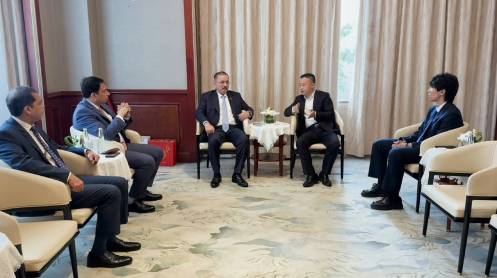
The National Electric Power Regulatory Authority (Nepra) on Wednesday conducted a hearing on a request filed by the Central Power Purchasing Agency (CPPA) seeking approval to refund Rs0.72 per unit to consumers. If approved, the adjustment would translate into an overall relief of around Rs5.6 billion. During November, actual power generation costs remained lower, while consumers were billed at comparatively higher rates.
The hearing, presided over by Nepra Chairman Waseem Mukhtar, reviewed the CPPA’s application and supporting data. Nepra has reserved its decision, which will be announced after further deliberations.
According to CPPA officials, the proposed reduction will benefit electricity consumers nationwide, including those of K-Electric, as part of the monthly FCA mechanism under federal policy guidelines. Nepra has also carried out a survey in Karachi to examine load-shedding patterns and local power supply issues.
Regulatory officials indicated that the total relief could reach nearly Rs6 billion. They added that future meetings may involve the Power Division to finalise budgetary matters linked to the adjustment.
During the hearing, Nepra Member Masood Anwar pointed out that the regulator had not approved the budget of the Power Planning and Monitoring Company, which incurred expenses worth Rs1.88 billion between FY2021-22 and FY2023-24.
Official figures show that electricity generation in November stood at 8,050 gigawatt-hours (GWh) at a total cost of Rs50.09 billion, translating into Rs6.22 per unit. After accounting for transmission losses, IPP sales and previous adjustments, net power supplied to distribution companies amounted to 7,813 GWh at a cost of Rs48.14 billion, or Rs6.162 per unit, including a prior refund adjustment of Rs0.037 per unit.
Hydropower remained the largest contributor to the national grid, supplying 3,153 GWh, or 39.16% of total generation. Nuclear power followed with 2,031 GWh (25.23%) at a cost of Rs2.27 per unit.
Among thermal sources, RLNG-based power plants generated 696 GWh (8.64%) at a high cost of Rs21.58 per unit. Local coal-based plants produced 752 GWh (9.34%) at Rs17.77 per unit, while imported coal plants contributed 407 GWh (5.06%) at Rs14.14 per unit. Electricity imports from Iran stood at 35 GWh, costing Rs22.57 per unit. Indigenous gas-based plants generated 680 GWh (8.44%) at Rs14.34 per unit. No power was generated using residual fuel oil or high-speed diesel during the month.
Renewable energy sources made a limited contribution, with wind power supplying 136 GWh, bagasse-based plants generating 75 GWh at Rs10.84 per unit, and solar power adding 86 GWh to the national grid.
As per federal guidelines, any FCA approved for ex-Wapda distribution companies will also be applicable to K-Electric consumers, ensuring a uniform power tariff adjustment nationwide.