

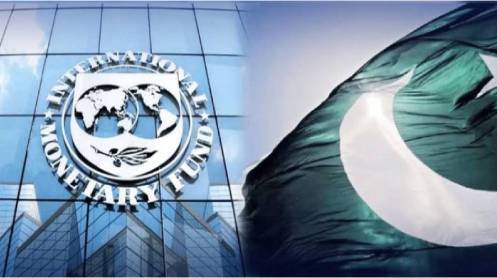
ISLAMABAD: Ongoing negotiations between Pakistan and the International Monetary Fund (IMF) moved to a virtual format on Monday after the Fund’s staff mission relocated from Islamabad to Istanbul due to escalating regional tensions following US and Israeli attacks on Iran.
The IMF mission, led by Iva Petrova, had begun in-person discussions in Karachi and Islamabad on the third review of Pakistan’s $7 billion Extended Fund Facility (EFF) and the second review of the $1.1bn Resilience and Sustainability Facility (RSF). However, an advisory from the IMF headquarters prompted the delegation’s immediate relocation, disrupting scheduled sectoral meetings.
In a statement, the IMF confirmed that discussions would continue via video link between Islamabad and Istanbul.
Earlier, Finance Minister Muhammad Aurangzeb chaired the formal kick-off meeting, where both sides briefly discussed the evolving regional security situation and agreed to monitor developments closely while advancing review talks.
The review process, scheduled to conclude on March 11, is critical as it assesses programme performance for the half-year ending December 31, 2025, and outlines forward-looking commitments, including budget preparations for the upcoming fiscal year.
According to the finance ministry, Aurangzeb reiterated the government’s commitment to fiscal discipline and macroeconomic stability under the IMF-supported programmes. He highlighted ongoing structural reforms in taxation and the energy sector, including efforts to modernise tax administration and operationalise the Tax Policy Office.
The minister also reaffirmed progress on privatisation and state-owned enterprise reforms, rightsizing the federal government, and pursuing an export-led growth strategy supported by tariff rationalisation and trade facilitation measures.
While noting signs of gradual economic recovery, Aurangzeb acknowledged emerging global headwinds, including geopolitical instability and volatility in international energy markets. He informed the IMF team that a high-level committee had been formed to monitor the evolving situation and coordinate policy responses.
The performance review shows Pakistan has largely met its quantitative performance criteria, though revenue shortfalls remain a concern. Net international reserves are projected slightly below the agreed benchmarks, while the State Bank’s net domestic assets remain within ceiling targets.
Upon successful completion of the review, Pakistan will become eligible for the release of approximately $1 billion under the EFF and $200 million under the RSF by the end of April.
Both sides agreed to continue technical and policy-level discussions virtually in the coming days, with a final wrap-up meeting planned before the conclusion of the review.
Story by Khaleeq Kiani





