Global financial markets plunged on Tuesday as the escalating conflict involving the United States, Israel and Iran triggered a sharp surge in energy prices, reigniting inflation fears and dampening expectations of interest rate cuts.
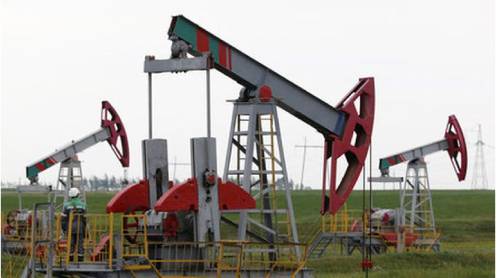
Brent North Sea crude, the international oil benchmark, jumped nearly nine percent to cross $85 per barrel for the first time since July 2024. European natural gas prices also surged for a second consecutive day, reflecting mounting concerns over disrupted Middle Eastern energy exports.
The conflict has severely impacted regional energy flows, particularly through the Strait of Hormuz — a vital corridor that carries roughly one-fifth of the world’s oil supply — which has effectively been closed amid heightened military tensions.
Investors fear that sustained supply disruptions could spark a fresh global energy crisis, drive inflation higher, and complicate monetary policy decisions for central banks already navigating fragile economic recoveries.
On Wall Street, major indices opened sharply lower, with the tech-heavy Nasdaq Composite falling around two percent. European markets suffered steeper losses, with key indices declining three percent or more.
Market analysts pointed to inflationary pressures as a central concern. Higher energy costs are pushing back expectations of interest rate cuts in major economies and, in some cases, raising the possibility of further rate hikes. Fresh data showing an unexpected rise in eurozone core inflation added to the unease.
The European Central Bank’s chief economist warned that a prolonged Middle East conflict and sustained energy supply disruption could trigger a spike in eurozone inflation while simultaneously dampening regional growth — a scenario that raises the specter of stagflation.
The Dutch TTF natural gas contract, Europe’s benchmark, surged more than 40 percent to exceed 60 euros — its highest level since January 2023, when prices spiked following the Ukraine war. European gas prices had already jumped 50 percent a day earlier after Qatar’s state energy firm announced a halt in liquefied natural gas production due to regional strikes.
The intensifying conflict has seen new strikes reported across the Middle East, including Israeli bombardment in Lebanon and a drone attack targeting the US embassy in Riyadh. Iran has launched missiles and drones across the region — including toward Saudi Arabia, Qatar and Dubai — and has explicitly threatened to drive up global energy costs. A senior commander of Iran’s Revolutionary Guards warned that any vessel attempting to navigate the Strait of Hormuz could be targeted.
Asian markets mirrored the global sell-off. Seoul tumbled more than seven percent as trading resumed after a long weekend, while Tokyo dropped over three percent. Markets in Hong Kong, Shanghai, Sydney, Wellington, Taipei and Jakarta also posted sharp losses.
The US dollar strengthened against major currencies as investors sought safe-haven assets amid escalating geopolitical and economic uncertainty. However, even traditional safe-haven assets such as gold struggled to attract sustained buying interest.
Analysts caution that if the conflict drags on, sustained volatility in energy markets could deepen global economic risks, intensify inflationary pressures, and place central banks in an increasingly difficult policy position — balancing price stability against slowing growth.
By AFP