Amid rising fuel prices and ongoing geopolitical tensions in the Middle East and the region, Pakistan’s motorcycle market is expected to remain resilient as consumers increasingly look for affordable transportation options.
Industry stakeholders fear that the continuing conflicts in the Middle East and the Pak-Afghan region could disrupt supply chains for imported auto parts. Shipping delays, higher freight charges, war risk premiums, and increased logistics costs are already putting pressure on assemblers. Transportation costs have also surged following the increase in the price of high-speed diesel, now fixed at Rs335.86 per litre.
These challenges may push up the cost of imported raw materials, forcing motorcycle assemblers to raise prices. However, market experts believe that demand for two-wheelers will remain strong, as motorcycles continue to offer a more economical option compared to cars or unreliable public transport.
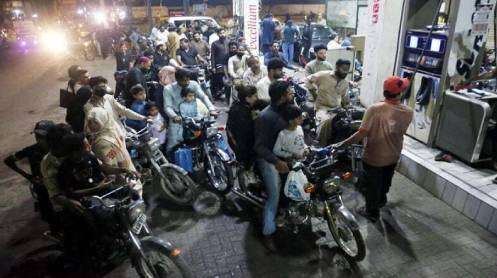
In recent years, many car owners have started keeping a 70cc to 150cc motorcycle at home as a cost-saving measure. With petrol prices expected to rise further, more households may adopt motorcycles as a practical alternative for daily commuting. This trend is also boosting the second-hand bike market, where prices have already surged due to the rising cost of new motorcycles.
Market analysts believe that the demand for 70cc motorcycles in particular could grow further in the coming months. Rural demand also plays a key role in bike sales, as farmers often replace old motorcycles after profitable harvests of wheat, cotton, rice, or sugarcane.
Motorcycle industry expert Mohammad Sabir Sheikh noted that the regional conflicts and economic uncertainty have affected consumer sentiment, resulting in lower footfall in motorcycle markets. Nevertheless, he emphasized that demand for motorcycles traditionally remains stable during difficult economic periods, especially when car prices rise.
Sales figures reflect this trend. Atlas Honda Limited (AHL) continues to dominate the market and has been setting new sales records since September 2025, particularly after the exit of Yamaha from Pakistan’s motorcycle market last year. In January 2026 alone, AHL sold a record 157,059 units. Overall sales during the first seven months of FY2026 reached 945,801 units, up from 703,226 units during the same period last year.
Other manufacturers also reported growth. Suzuki sold 20,282 units compared to 13,910 units last year, while United Motorcycles recorded sales of 101,703 units, up from 80,370 units.
According to large-scale manufacturing data, Pakistan’s overall motorcycle production surged by 41 percent during July–December FY2026, reaching 1.9 million units compared to 774,461 units during the same period of the previous fiscal year.
Despite higher petrol prices, the shift toward electric motorcycles remains limited. Industry experts estimate that only about one percent of petrol motorcycle buyers have switched to electric bikes. High prices, limited resale value, and performance issues continue to discourage buyers.
Demand for electric bikes is somewhat stronger in Punjab cities, where road conditions are comparatively better. In Karachi, however, poor road infrastructure, higher crime rates, and frequent incidents of bike snatching remain major concerns for buyers.
In a city where public and private transport options remain insufficient, motorcycles continue to serve as the most practical and affordable mobility solution for millions of commuters.
Story by Aamir Shafaat Khan