KARACHI: Escalating tensions in the Middle East have triggered sharp volatility in global energy markets, but the crisis is emerging as a potential opportunity for Pakistan’s exploration and production (E&P) sector, according to a research report.
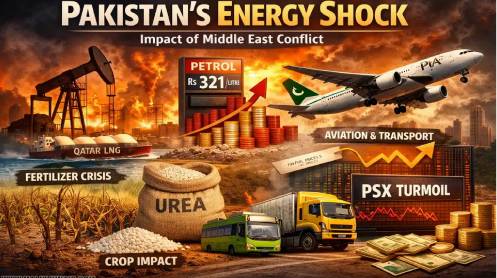
The conflict involving the United States, Israel, and Iran has disrupted key energy infrastructure and supply routes, particularly the Strait of Hormuz, through which nearly 20% of global oil and LNG trade flows. These disruptions have pushed international oil prices sharply higher, with Arab Light crude reaching around $120 per barrel.
A report by Insight Securities noted that while rising oil prices pose macroeconomic challenges for Pakistan—such as higher import bills and inflation—they simultaneously create a favourable environment for domestic E&P companies.
“As global oil prices rise, local pricing linked to international benchmarks translates into stronger revenues for E&P firms,” said Asim Hassan, who authored the report. He added that oil revenue gains are expected to materialise quickly, with gas revenues following after a lag.
In addition to oil price gains, disruptions in LNG supply chains—particularly constraints linked to Qatar and reduced vessel movement through the Strait of Hormuz—are reshaping Pakistan’s gas supply dynamics. The country, which imports around 900 million cubic feet per day (mmcfd) of LNG, is now facing tighter supply conditions.
Previously, local gas production had been curtailed by approximately 350 mmcfd due to excess LNG in the system and weak demand from power and industrial sectors. However, with LNG supplies now constrained, domestic E&P companies are expected to gradually restore production, helping bridge the supply gap.
The report also highlighted that recent government measures to improve cost recovery in the gas sector have enhanced the financial position of E&P companies. A decline in LNG imports could further reduce the weighted average cost of gas (WACOG), easing pressure on gas utilities and supporting timely payments to upstream producers.
However, risks remain. Prolonged conflict could exacerbate Pakistan’s external account pressures by increasing energy import costs and widening the trade deficit, potentially leading to currency depreciation. Any delay in passing on higher gas prices could also reignite circular debt issues and impact E&P receivables.
Despite these challenges, analysts view the current environment as a “silver lining” for the E&P sector, as higher international prices—linked to dollar-based benchmarks—position domestic producers to benefit, even as the broader economy faces headwinds.