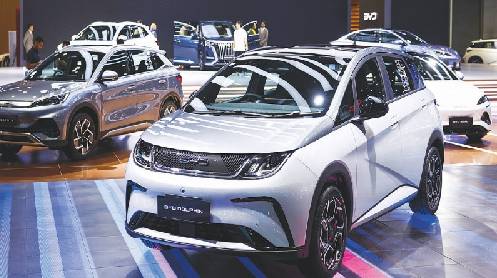
Amid soaring fuel prices, industry experts say Pakistan is witnessing a growing shift toward New Energy Vehicles (NEVs), a transition that could significantly reduce the country’s dependence on imported petroleum.
According to Danish Khaliq, Vice President Sales and Strategy at BYD Pakistan-Mega Motor Company, the current fuel price environment is strengthening the case for accelerated adoption of NEVs. With petrol prices rising by 20–25%, the cost of operating conventional vehicles has surged, making electric and hybrid alternatives increasingly attractive.
He emphasized that targeted government support will be crucial to sustain this momentum. “Tax concessions, accessible financing, and a stable policy framework can make NEVs affordable for all consumer segments,” he noted, adding that incentives for local manufacturing, charging infrastructure, and technological expansion are equally important to scale electric mobility.
Khaliq stressed the need for long-term policy consistency, suggesting a 10-year roadmap to give investors confidence in committing to manufacturing and supply chain development. He pointed out that the current Automotive Industry Development and Export Policy (AIDEP), set to expire in the first half of 2026, has already guided major investments, including a state-of-the-art plant planned to become operational in Q3 2026.
He also called for a technology-neutral policy approach across all NEV categories, with a clear distinction between Completely Built Units (CBUs) and Completely Knocked-Down (CKD) imports—encouraging initial market entry through CBUs while ensuring gradual localisation.
Automobile expert Shafiq Ahmed Shaikh highlighted the significance of the National Energy Vehicle Policy 2025–2030, describing it as a transformative roadmap to modernise Pakistan’s transport sector. The policy prioritises domestic manufacturing, reduces reliance on fuel imports, and promotes adoption of advanced automotive technologies.
He noted that the government has allocated approximately Rs100 billion in subsidies, tax waivers, and low-interest financing to support consumers. Additionally, the policy aims to develop around 3,000 EV charging stations nationwide by 2030 at a fixed commercial tariff, while also protecting local industry through stricter regulations on used vehicle imports.
Shaikh pointed out that global fuel volatility—exacerbated by ongoing geopolitical tensions—has sharply increased petroleum prices in Pakistan, with petrol reaching around Rs321.17 per litre and diesel Rs335.86 per litre. These increases have fueled inflation, impacting public transport, daily commuters, and the agriculture sector, where higher diesel costs directly affect harvesting and logistics.
He warned that rising oil import bills are placing pressure on foreign exchange reserves and the national trade balance, underlining the urgency of transitioning to alternative energy solutions.
Looking ahead, Shaikh suggested that oil marketing companies could begin converting at least 10% of their fuel stations into EV charging facilities, aligning with the global shift toward electric and hybrid mobility.
As fuel costs remain volatile, experts agree that Pakistan’s transition to NEVs is no longer optional but essential for economic stability, energy security, and environmental sustainability.
Story by Gohar Ali Khan