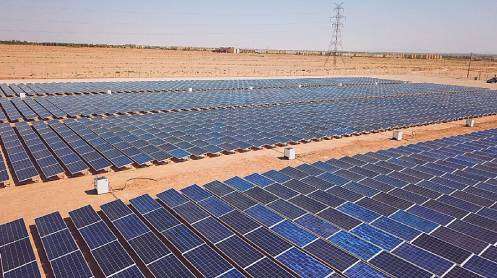
ISLAMABAD: The Pakistan Solar Association (PSA) has proposed a shift to a 130% Maximum Retail Price (MRP)-based valuation for solar panels and inverters, aiming to simplify taxation, curb the grey market, and enhance government revenue collection.
In a formal submission to the Power Division and the Federal Board of Revenue (FBR), the association highlighted anomalies in the current tax structure under the Finance Act 2026, where solar panels are subject to 10% General Sales Tax (GST) and inverters to 18%. According to PSA, this differential, multi-stage taxation has led to pricing distortions, complex compliance requirements, and increased litigation risks.
The association argued that solar equipment—primarily used for end-user installations in residential, commercial, and industrial sectors—should be taxed under a single-stage, consumer-based model. It recommended inclusion of these products in the Third Schedule of the Sales Tax Act, 1990, allowing taxation at the import or manufacturing stage based on a declared retail price.
Under the proposed framework, GST would be calculated on 130% of the declared MRP at the import stage, ensuring higher upfront revenue, improved documentation, and reduced downstream compliance burdens.
Data shared by PSA indicates that Pakistan imported over 19,003MW of solar panels in 2025, valued at $1.71 billion (Rs484 billion). At the current 10% GST, tax collection stands at Rs48.89 billion. However, under the proposed MRP regime, it could rise to Rs63.55 billion—an increase of Rs14.66 billion.
Similarly, solar inverter imports worth $410 million (Rs116 billion) generated Rs21.10 billion in GST at 18%. With 130% MRP valuation, this could increase to Rs27.43 billion, adding Rs6.33 billion in revenue.
PSA maintained that the revised system would promote transparency, reduce tax evasion, and support the formalisation of Pakistan’s rapidly growing renewable energy sector. It added that a simplified and uniform taxation model would lower compliance costs, minimise disputes, and align with the government’s broader clean energy and documentation objectives.
Story by Mushtaq Ghumman