

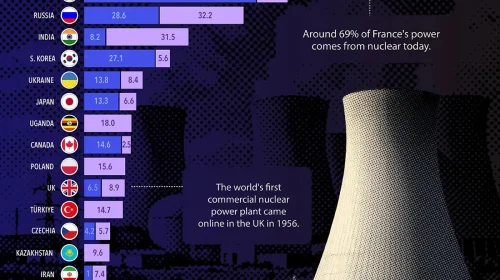
As of 2026, more than 30 countries across the world are generating electricity through nuclear power, highlighting its growing importance as a reliable and low-carbon energy source. According to the World Nuclear Association, the United States, China, and France remain the top nuclear power producers globally.
The United States leads with around 94 operational reactors, making it the largest producer of nuclear electricity. China ranks second, rapidly expanding its nuclear fleet with over 60 reactors as part of its clean energy transition strategy. France continues to rely heavily on nuclear power, generating approximately 65–67% of its electricity from nuclear sources.
Other major contributors include Russia (34+ reactors), South Korea (26+ reactors), *Canada, **Ukraine, **Japan, **India, and the *United Kingdom, all playing significant roles in global nuclear generation.
Among emerging nuclear nations, Pakistan is steadily strengthening its nuclear energy portfolio. The country currently operates 6 nuclear power reactors with a total installed capacity of approximately *3,530 MW. Nuclear energy contributes around *8–10% to Pakistan’s electricity mix, with key plants located at Chashma and Karachi, including the advanced K-2 and K-3 units developed with international collaboration.
In addition, countries such as Sweden, Finland, Belgium, Spain, and the United Arab Emirates are actively utilizing nuclear power, while Bangladesh has recently joined the list of nuclear-capable nations with the development of its first plant.
Globally, nuclear power remains a cornerstone for energy security and decarbonization, especially as countries aim to reduce reliance on fossil fuels and ensure stable electricity supply.





