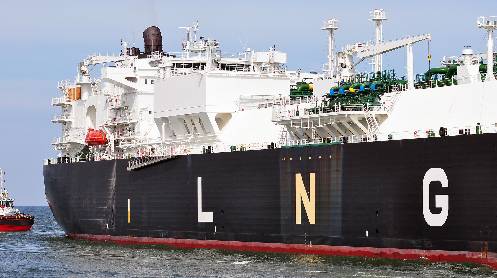
ISLAMABAD: Federal Power Minister Awais Leghari has announced the end of a month-long period of loadshedding following the arrival of a liquefied natural gas (LNG) shipment in Pakistan.
In a recorded televised message, the minister explained that recent power outages were primarily caused by a gas shortage linked to tensions between the United States and Iran, rather than any system failure or mismanagement.
He recalled that on April 13–14, electricity outages lasted up to five hours, increasing to around seven hours on April 15–16. However, the situation gradually improved, with outages reduced to zero in subsequent days and limited to 2–2.5 hours until April 29.
Leghari noted that the government avoided extensive use of costly fuels such as diesel and furnace oil to prevent a surge in electricity prices. Instead, hydropower generation was ramped up significantly, reaching 6,000 MW compared to 1,000 MW earlier.
During the crisis, fuel-based power plants were used selectively to stabilize supply amid LNG shortages. The government also procured expensive gas from the spot market to bridge the supply gap. On April 24, Pakistan LNG Limited (PLL) secured three LNG cargoes priced between $17.997 and $18.88 per mmBtu, scheduled for delivery between April 27 and May 8.
The minister confirmed that LNG supplies had been disrupted after April 1 due to force majeure declared by QatarEnergy, creating a significant shortfall in gas-based power generation during peak demand.
He reiterated that temporary loadshedding—limited to around two hours daily—was implemented to keep electricity tariffs under control. Notably, areas served by K-Electric and Hyderabad Electric Supply Company were exempt from the policy.
Leghari expressed confidence that no further loadshedding would be required and voiced optimism that the national transmission system would remain stable during the peak summer season.
Story by Khaleeq Kiani