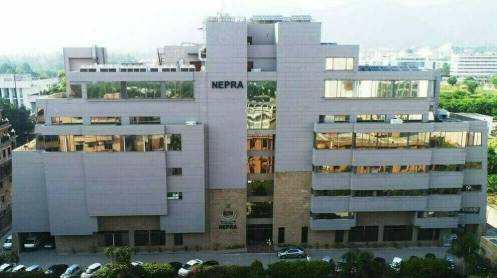
ISLAMABAD: The National Electric Power Regulatory Authority (NEPRA) has raised serious concerns over the proposed Indicative Generation Capacity Expansion Plan (IGCEP) 2025-35, questioning the justification for new power generation projects despite existing surplus capacity and declining electricity demand in the country.
According to the proposed IGCEP 2025-35, Pakistan’s installed electricity generation capacity is projected to increase by nearly 49 per cent, reaching 64,035MW by 2035 compared to 43,069MW in 2024.
A comparison between the latest IGCEP and the previous IGCEP 2024-34 reveals major revisions, including delays in key hydropower projects such as the 2,160MW Dasu Hydropower Project, the 800MW Mohmand Hydropower Project, and the 4,500MW Diamer Bhasha Dam.
The updated plan also includes 3,109MW of renewable energy projects based on market-driven induction, leading to corresponding adjustments in transmission and evacuation infrastructure timelines.
NEPRA raised a wide range of questions regarding the credibility, transparency, and practicality of the proposed expansion strategy.
Among its major concerns, the regulator questioned why additional generation capacity was being planned despite surplus electricity and shrinking grid demand. It also challenged the realism of future demand projections being used to justify further expansion.
The authority further questioned why projects proposed by provincial governments and K-Electric had not been adequately incorporated into the plan and why detailed consultations with distribution companies (DISCOs) were not conducted regarding the data used.
NEPRA also sought clarification on inconsistencies related to plant factors for low-BTU gas-fired plants, discrepancies in installed generation capacities, and the basis for determining commercial operation dates (CODs) of future projects, which it described as unrealistic.
The regulator additionally pointed out a lack of alignment between the IGCEP and the Transmission System Expansion Plan (TSEP), questioning how consistency would be ensured between the two planning documents.
Among other issues, NEPRA questioned the justification for including a proposed 40MW technology-neutral project in Gwadar for system reliability and criticised the absence of any assessment regarding the impact of future capacity additions on consumer electricity tariffs.
The authority also highlighted the absence of independent third-party review or vetting of the submitted plan.
According to government officials, despite consistency in overall national load forecasts between TSEP 2024-34 and IGCEP 2025-35, electricity distribution companies have reported a sharp decline in grid-connected electricity consumption.
The National Grid Company (NGC) attributed the decline to slower economic activity and the rapid growth of rooftop solar systems and net-metering across the country.
However, long-term planners consider the decline temporary and believe it is not yet significant enough to alter long-term transmission expansion decisions. Officials stated that the trend would continue to be monitored closely and future plans could be revised if the decline persists.
The revised analysis also projects a substantial increase in electricity exports from the national grid to K-Electric, expected to rise to 3,456MW by 2035 compared to earlier estimates of 2,050MW.
However, these revised export figures have not yet been formally incorporated into the addendum, pending detailed cost assessments and system reinforcement studies by both K-Electric and NGC.
The addendum mainly revises scenarios where generation project timelines have changed due to delays in major hydropower schemes.
For the June 2027 scenario, only one 360MW unit of the Dasu project has been included, while the Mohmand project contribution has been excluded entirely due to delays.
Similarly, in the June 2029 scenario, the Diamer Bhasha project has been excluded, whereas earlier assumptions had included five generating units totaling 1,875MW.
For the July/August 2034 peak demand scenario, all 12 units of Diamer Bhasha, each with a capacity of 375MW, have been considered alongside nearly 1,400MW of optimised wind power projects.
The plan assumes that 800MW and 500MW wind projects within existing QESCO and Jhimpir transmission networks would require no additional grid reinforcement.
Despite falling grid consumption due to rapid solar adoption and net-metering, planners maintain that Pakistan’s long-term energy transition and transmission development strategy will continue to move forward while keeping future demand trends under review.
Story By Mushtaq Ghumman