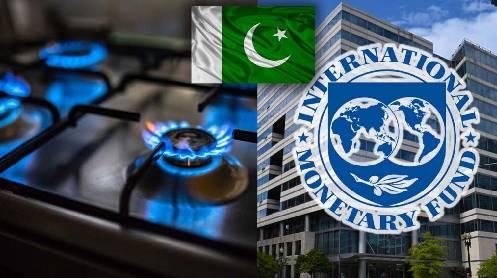
ISLAMABAD: The International Monetary Fund (IMF) has revealed that Pakistan’s gas sector circular debt surged to an estimated Rs3.442 trillion by early 2026, despite regular tariff increases aimed at curbing fresh debt accumulation.
Thank you for reading this post, don't forget to subscribe!According to the IMF’s report on the Third Review under the Extended Fund Facility (EFF) and the Second Review under the Resilience and Sustainability Facility (RSF), periodic gas tariff adjustments in line with costs have helped prevent further accumulation of principal circular debt. However, mounting late payment surcharges on the existing debt stock continue to push the overall liability upward.
The Fund stated that the gas sector’s circular debt stood at approximately Rs3.4 trillion, equivalent to 2.7 percent of GDP, as of December 2025.
The report highlighted that gas companies are facing growing financial stress due to weak domestic consumption, declining demand from the power sector, and the ongoing Captive Power Plant (CPP) transition, despite a 29 percent year-on-year increase in industrial gas consumption during the first half of fiscal year 2026-27.
The government informed the IMF that it has developed a comprehensive monitoring dashboard covering various components and drivers of circular debt in the gas sector.
Authorities also stated that a quarterly gas circular debt reporting system has been introduced, supported by improved data management and forecasting capacity. In addition, the government has prepared a Circular Debt Management Plan (CDMP), which is expected to be formally implemented during FY27 after obtaining necessary approvals.
A dedicated circular debt settlement office will also be established to oversee implementation of the management plan.
“We will continue to provide quarterly gas circular debt data within two months of the close of each quarter, along with monthly gas consumption and revenue data to the Fund and development partners with a six-week lag,” the authorities assured the IMF.
As part of commitments under the IMF programme, the government has pledged to ensure full pass-through of international energy prices through regular gas tariff adjustments.
The government plans to notify semi-annual tariff revisions on July 1, 2026, and February 15, 2027, based on determinations made by the Oil and Gas Regulatory Authority (OGRA). The authorities also committed to passing on the higher costs of imported Re-gasified Liquefied Natural Gas (RLNG) to domestic consumers while protecting low-income households through targeted subsidies.
The report further stated that the government intends to manage surplus RLNG supplies by improving coordination with the power sector and optimising supply chains within existing contractual arrangements.
The IMF warned that Pakistan’s current account is likely to deteriorate further in FY27 due to elevated global oil and gas prices, although subdued domestic demand may partially offset the impact of higher energy imports on the trade deficit.
“In an environment of high and volatile commodity prices, recent improvements in energy sector finances need to be sustained by keeping domestic fuel, electricity, and gas prices aligned with costs, while protecting vulnerable consumers through targeted support,” the IMF said.
The Fund also emphasized the need for continued reforms to reduce inefficiencies and operational costs in the energy sector to improve financial sustainability and strengthen Pakistan’s economic competitiveness.
Story by Wasim Iqbal