LAHORE: Pakistan’s energy sector witnessed a significant transition during the first nine months of FY2025-26, as hydropower, renewable energy and nuclear power collectively surpassed thermal power in installed electricity generation capacity for the first time, according to the Pakistan Economic Survey 2025-26.
The survey highlights a steady shift toward cleaner and indigenous energy resources as the government continues efforts to strengthen energy security, reduce dependence on imported fuels, and promote sustainable and affordable power generation.
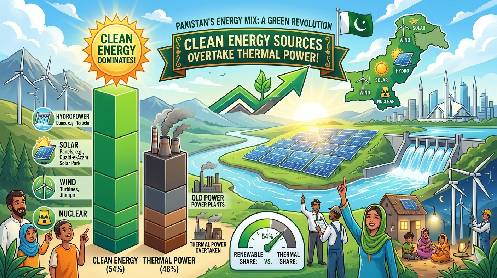
Pakistan’s total installed electricity generation capacity rose to 49,651 megawatts (MW), compared to 45,782MW a year earlier. Hydel, renewable and nuclear energy sources accounted for 50.8% of total installed capacity, while the share of thermal power declined to 49.2%, down from 56.7% in the previous year.
During July-March FY2025-26, the country generated 92,835 gigawatt-hours (GWh) of electricity, with clean energy sources—including hydropower, nuclear and renewables—contributing 53.1% of total generation, reinforcing Pakistan’s transition toward a greener energy mix.
Power Consumption Trends
Electricity consumption increased by 3.8% to 83,143GWh during the period under review. The residential sector remained the largest consumer, accounting for 47.5% of total electricity usage. Industrial demand also strengthened, with its share rising to 31.5%.
In contrast, power consumption in the agriculture sector declined sharply by 42.3%, largely due to the increasing adoption of solar-powered irrigation systems and evolving farming practices.
Growing Investment in Power Sector
The Private Power and Infrastructure Board (PPIB) continued to attract investment into Pakistan’s energy sector, facilitating more than 102 Independent Power Producers (IPPs) with a combined capacity exceeding 25,800MW. These projects have attracted over $35 billion in foreign investment.
Among key developments during the fiscal year, a 32MW bagasse-based power plant commenced commercial operations in October 2025. Progress also continued on a 100MW solar project in Gilgit-Baltistan, a 40MW power project in Gwadar, solarisation of water infrastructure in the port city, and the installation of solar systems at 397 healthcare facilities nationwide.
Thar Coal Remains Strategic Resource
Despite the growing role of renewables, Thar coal continues to play an important role in Pakistan’s energy security strategy. Five operational Thar coal-fired power plants with a combined capacity of 3,300MW are currently supplying electricity to the national grid.
The government is also working to replace imported coal with indigenous Thar coal at major power plants established under the China-Pakistan Economic Corridor (CPEC), reducing reliance on foreign fuel imports.
Nuclear Power Contribution Expands
Pakistan’s six operational nuclear power plants, with a combined installed capacity of 3,530MW, generated more than 17,133GWh of electricity during the first nine months of FY2025-26.
According to the survey, nuclear energy helps prevent approximately 16–18 million tonnes of greenhouse gas emissions annually, supporting the country’s climate goals.
Construction of the 1,200MW Chashma-5 Nuclear Power Plant is progressing and is expected to be completed by 2030-31.
Gas Sector Faces Supply Challenges
Indigenous natural gas remained a major component of Pakistan’s primary energy mix, contributing 29.3% during FY2025-26. However, declining domestic gas reserves have increased dependence on imported liquefied natural gas (LNG).
Average gas consumption during July-March stood at 2,929 million cubic feet per day (mmcfd), including 613mmcfd of imported re-gasified LNG (RLNG).
Despite supply challenges, gas utilities expanded their distribution networks and provided more than 149,000 new gas connections during the first nine months of the fiscal year.
LPG Sector Records Growth
The liquefied petroleum gas (LPG) sector also expanded, with total supplies reaching approximately 1.97 million tonnes. Pakistan currently has 11 LPG producers, 382 marketing companies, and around 6,200 authorized distributors.
Investment of nearly Rs10.36 billion was made in LPG infrastructure, reflecting ongoing efforts to strengthen supply chains and improve access to cleaner cooking and industrial fuels.
Coal Consumption Increases
Coal consumption rose to 21.4 million tonnes, driven primarily by demand from the power sector. Electricity generation accounted for 59.6% of total coal usage, while brick kilns consumed 20.8% and cement manufacturers and other industries accounted for the remaining 19.6%.
The survey concludes that while Pakistan is making notable progress in expanding renewable, hydel and nuclear energy capacity, balancing energy security, affordability and sustainability remains central to the country’s long-term energy strategy.
Story by Ahmad Fraz Khan