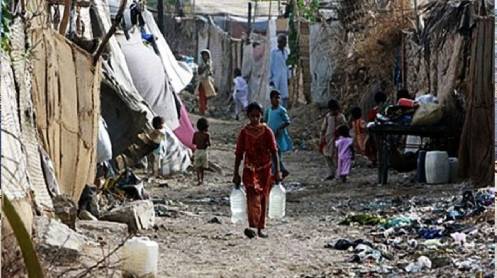
ISLAMABAD: Pakistan’s poverty rate has risen sharply by seven percentage points over the past six years, pushing an estimated 27 million additional people into financial distress and increasing the country’s total impoverished population to around 70 million, according to the Economic Survey 2025-26.
The survey reveals that the national poverty rate increased from 21.9% in 2018-19 to 28.9% in 2024-25, reflecting the mounting economic challenges faced by households across the country. Poverty remains considerably higher in rural areas, where the rate surged from 28.2% to 36.2%, while urban poverty climbed from 11% to 17.4% during the same period.
Provincial Poverty Levels Rise
Poverty increased across all four major provinces. In 2024-25, poverty rates were estimated at:
- Punjab: 23.3% (up from 16.5%)
- Sindh: 32.6% (up from 24.5%)
- Khyber Pakhtunkhwa: 35.3% (up from 28.7%)
- Balochistan: 47% (up from 41.8%)
Balochistan continued to record the highest poverty incidence, while Punjab remained the province with the lowest poverty rate.
Economic Shocks Behind Rising Poverty
The survey attributes the worsening poverty situation to a combination of prolonged economic shocks, including record-high inflation, currency depreciation, IMF-backed stabilization measures, devastating climate-related disasters such as floods, and regional geopolitical tensions, including conflicts in the Middle East.
These factors have eroded purchasing power, increased food insecurity, and placed additional financial pressure on households, including those dependent on remittances.
Inequality Also Worsens
The report highlights a significant rise in income inequality. Pakistan’s Gini coefficient, a key measure of income distribution, increased from 28.4 in 2018-19 to 32.7 in 2024-25.
Urban inequality rose from 31.0 to 34.4, while rural inequality increased from 23.4 to 36.6, indicating widening disparities in income and wealth across both regions.
At the provincial level, the Gini coefficient in 2024-25 stood at:
- Sindh: 35.9
- Punjab: 32.0
- Khyber Pakhtunkhwa: 29.4
- Balochistan: 26.5
Sindh recorded the highest level of inequality among the provinces, underscoring growing disparities despite economic activity in the province.
Poverty Measurement Framework
According to the survey, Pakistan’s national poverty estimates are calculated using the Cost of Basic Needs (CBN) approach, the country’s standard methodology for measuring consumption-based poverty. Under this framework, the poverty line represents the minimum expenditure required to meet essential food and non-food needs.
The findings underscore the urgent need for targeted economic reforms, social protection measures, and inclusive growth strategies to address rising poverty and inequality across Pakistan.
Story by Bakhtawar Mian