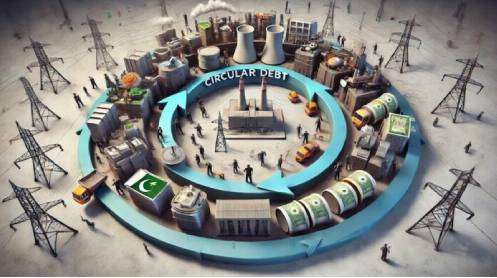
ISLAMABAD: Pakistan’s power sector circular debt flow rose to Rs1.857 trillion during the first ten months of FY2025-26, primarily due to delayed government subsidy payments and mounting receivables from K-Electric. However, authorities maintain that the overall circular debt stock is expected to remain unchanged by the end of the fiscal year.
According to official figures, circular debt flow increased by Rs240 billion from Rs1.614 trillion recorded in June 2025. Despite the rise, the debt burden has declined significantly on a year-on-year basis, falling by Rs557 billion from Rs2.41 trillion in April 2025. The reduction has been attributed to financial restructuring initiatives, targeted repayments, and improved sector management.
Officials said efforts are underway to recover outstanding dues from provincial government departments through at-source deductions. Under the initiative led by the Finance Ministry, up to 25 percent of pending liabilities are being recovered directly, a move expected to further ease pressure on the sector.
Sources in the Finance Division indicated that approximately Rs240 billion in pending payments are expected to be settled soon, enabling the government to achieve its target of zero net addition to circular debt by the close of the current fiscal year.
The Power Division emphasized that the April figure reflects the monthly flow of circular debt rather than the year-end stock and should not be viewed as a definitive indicator of the sector’s financial position.
“At the end of June 2026, the circular debt stock is expected to remain around Rs1.614 trillion, reflecting no increase during the fiscal year,” a Power Division spokesperson said. The spokesperson noted that seasonal factors such as subsidy disbursements, utility settlements, and payments involving K-Electric can significantly influence monthly figures.
The government has urged analysts and stakeholders to assess the sector’s performance based on year-end stock figures rather than interim flow data to avoid misconceptions regarding the financial health of the power sector.
Meanwhile, operational performance among public sector power distribution companies (DISCOs) has shown improvement. Operational inefficiencies declined by Rs66 billion during July-April FY2025-26 compared to the corresponding period last year, reflecting enhanced governance, better recoveries, and stricter enforcement measures.
However, K-Electric remains a major challenge for the sector. Outstanding liabilities of the Karachi-based utility surged to Rs363 billion by April 2026, up more than 58 percent from Rs229 billion a year earlier. The amount includes Rs164 billion in principal dues and Rs199 billion in accumulated markup.
Officials said the liabilities have continued to grow after K-Electric obtained a court stay order regarding its multi-year tariff determination, effectively suspending payments owed to the national power system.
Despite these challenges, the government remains committed to implementing its Circular Debt Management Plan, which aims to achieve zero net addition to the circular debt stock by the end of FY2025-26. If realized, it would mark the first fiscal year in which Pakistan’s power sector avoids any increase in its long-standing circular debt burden.
Story by Israr Khan