KARACHI/LAHORE: The electric vehicle (EV) industry has welcomed the federal government’s expanded tax and customs-duty incentives announced in Budget 2026-27, describing them as a positive step toward cleaner transport, reduced fuel imports, and strengthened local manufacturing. However, stakeholders have urged policymakers to establish a longer-term, predictable policy framework to sustain investment and accelerate sector growth.
The budget continues a broad range of concessions for electric passenger and commercial vehicles, manufacturing inputs, and charging infrastructure, reflecting the government’s commitment to energy transition, environmental sustainability, and industrial localisation.
Under the new measures, customs-duty exemptions on CKD kits for locally assembled electric buses, trucks, motorcycles, rickshaws, loaders, and prime movers have been extended until June 30, 2027. The government has also retained a reduced 1 percent sales tax on small electric cars and SUVs with battery capacities up to 50 kWh, as well as light commercial EVs with batteries up to 150 kWh.
In addition, EV manufacturing plant and machinery will continue to enjoy customs-duty exemptions, while imported electric cars with battery capacities up to 50 kWh will remain subject to a concessional 12.5 percent sales tax.
A revised Federal Excise Duty (FED) structure has also been introduced for imported EVs used for personal consumption. Vehicles valued up to Rs20 million remain exempt, while those priced between Rs20 million and Rs30 million will be subject to 30 percent FED, and vehicles above Rs30 million will face a 40 percent duty.
The exemption from FED on electric four-wheelers has been extended until June 2027, maintaining a significant tax advantage over conventional fuel-powered vehicles. Meanwhile, incentives for hybrid vehicles are expected to taper off as concessional tax rates on locally manufactured hybrids are set to expire by June 30, 2026.
Industry experts discussed the budget’s impact during a webinar organised by the Indus Consortium titled “Budget 2026-27: What It Means for Pakistan’s EV Future”. While participants broadly appreciated the policy direction, they expressed concern over its short-term horizon.
Yasir Hussain noted that fears of higher taxation on new energy vehicles had not materialised, as EV-related tax structures remained largely unchanged. However, he pointed out that luxury vehicles above Rs20 million now face higher taxation, while subsidies for electric two- and three-wheelers continue. He also highlighted emerging local investment, including two battery manufacturing plants under development in Karachi.
Dr Aazir Khan described the budget as a stabilisation-oriented fiscal plan, noting that while development spending has increased, EV-specific subsidies remain limited. He stressed the need for a multi-year policy framework, improved grid capacity, and stronger infrastructure to support EV adoption.
Saif Muhammad Shah warned that the one-year incentive structure could discourage long-term investment. He recommended a three- to five-year policy horizon, alongside increased focus on research and development to improve EV performance, battery efficiency, and range, particularly for electric two-wheelers.
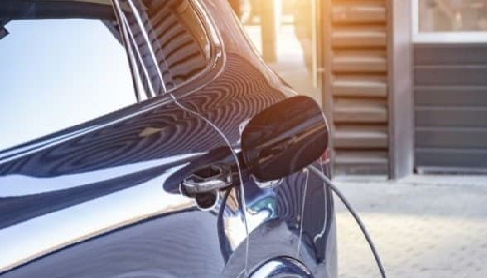
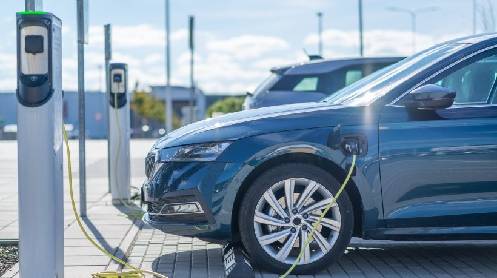
He also emphasised the importance of expanding charging infrastructure nationwide and developing a dedicated framework for heavy-duty electric vehicles, which account for a large share of transport emissions.
Officials reviewing the Auto Industry Development and Export Policy (AIDEP) sub-committee discussions indicated that future incentives will likely be tied to localisation, technology transfer, job creation, and export performance. Industry stakeholders, meanwhile, have called for maintaining a stable duty gap between Completely Built Units (CBUs) and Completely Knocked Down (CKD) imports to support domestic assembly and attract investment.
With broad tax relief extended across the EV value chain, Budget 2026-27 marks one of Pakistan’s most significant policy pushes toward electric mobility. However, experts caution that sustained growth will depend on policy continuity, infrastructure expansion, and consistent support for innovation to build a resilient EV ecosystem.
Story by Jawwad Rizvi